








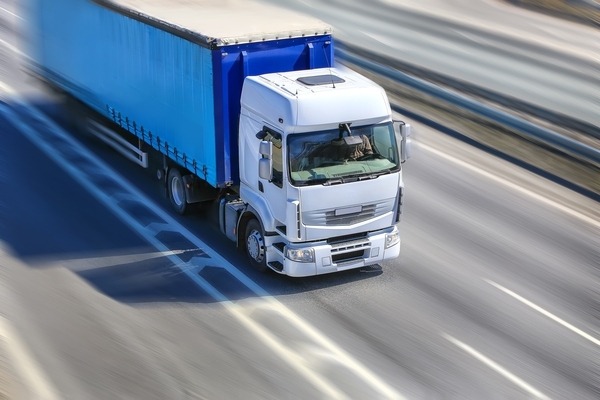
Road transport is the most popular means of moving people and goods in today’s world. The intensive development of road transport began at the end of the 20th century. The means of transport used is a road vehicle, which we use to transport passengers and goods. It is a transport service provided by road hauliers. The main advantage of this type of transport is that we have the ability to deliver passengers or cargo directly to the destination. However, the downside of this branch of transport is its energy intensity and harmful impact on the environment.
A motor vehicle is a complex technical object that has specific physical and geometric characteristics. The movement of a car is a response to the driver’s actions, however, there are serious disturbances and limitations to this movement. These limitations result from the fact that the movement of a car is subject to the laws of physics, and in particular dynamics. Understanding these principles and laws is essential to explain the processes occurring during the movement of a car, as well as to explain certain critical situations, such as vehicle rollover.
The movement of a car can also be treated as an energy process in which energy is transferred from the engine to the drive wheels. External influences, such as the effect of crosswinds and the interaction of other road users and road irregularities, have a significant impact on the movement of a car.
Car motion resistance
In order to properly perform transport tasks, a vehicle should be characterized by appropriate dynamic properties, which determine the car’s maximum performance (the so-called upper limits). The movement parameters are determined by the layout and value of external forces acting on the vehicle. In the case of rectilinear motion, such forces are motion resistances. Motion resistances include those external forces which, running parallel to the direction of the vehicle’s movement, have the opposite direction, namely:
- rolling resistance (acting on the line of contact between the wheel and the surface),
- air resistance (acting on the aerodynamic center of pressure, the height of which above the road depends on the shape of the car body),
- gradient resistance (assigned to the center of gravity of the car).
Rolling and air resistances always occur, and their sum constitutes the so-called basic resistance Ftp, while gradient resistances occur periodically. Gradient resistance occurs only when driving uphill and consists of the component of gravity parallel to the surface. In the case of driving downhill, this component, by taking a direction consistent with the direction of travel, becomes a force forcing the car’s movement.
Rolling resistance
Rolling resistance is the sum of the rolling resistances of all wheels, also in trucks with different tire dimensions on the front and rear axles, where an identical value of the rolling resistance coefficient is assumed for all wheels.
The article contains 16,530 characters.
Source: Logistyka Magazine