








Due to increasing requirements in terms of internal and external customer service, rising costs of capital, handling, and storage, logistics has developed both within enterprises and between organizations. The word logistics is often presented as knowledge (a collection of techniques, methods, and operating principles) and a sphere of management, including processes and practical actions, relating primarily to interconnected flows of goods and information.
The importance of logistics grows in parallel with increasing market competition. This phenomenon affects not only large corporations but also small and medium-sized enterprises. The tasks assigned to logistics departments differ depending on the size and structure of the company. In small enterprises, all logistics functions may be performed by one person (often the owner), whereas in corporations there are departments dealing with logistics, including procurement, production, distribution, or returns. In Poland, logistics only gained recognition in the mid-90s. Initially, its goal was processes related to the flow of raw materials and materials, as well as various processes related to warehousing, storage, and distribution of goods. Examples of trends affecting logistics include increased competition and the development of information technology. Logistics systems are purposefully organized and integrated flows of materials and products and their corresponding information, which enable optimization in supply chain management (e.g., through identification of goods in the supply chain, preliminary computer simulation, monitoring throughout the entire process and controlling, electronic data interchange, or comprehensive cost accounting provided by logistics operators) while taking ecological requirements into account.
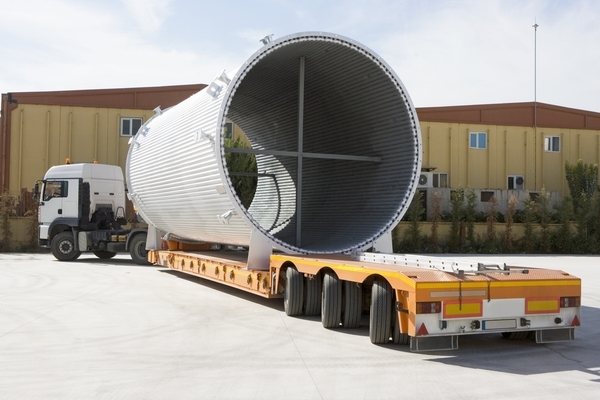
In the transport services market, there is a demand for the transport of cargo that, due to its characteristics, is not suitable for transport by standard means of transport. Economic growth and new investments result in a constant increase in the number of non-standard (oversized) cargo shipments. These loads have weight and/or dimensions that deviate from the load capacity and/or cargo space parameters of standard transport vehicles. At the same time, these are goods of high material and utility value. A type of transport has emerged on the market, called special (non-standard, oversized) transport, which is a comprehensive transport and forwarding service requiring complex and valuable handling equipment, specialized transport rolling stock, and specialized personnel preparing and carrying out such transport. Often, transport takes place throughout Europe. Each such process, depending on the type of cargo and the transport route, requires individual logistics preparation, sometimes lasting several months.
The main goal of managing a logistics system is to achieve the required state of efficiency and effectiveness throughout the entire chain. Efficiency and effectiveness, in this case, are linked to the concept of reliability of the logistics system – delivering oversized cargo to the recipient on time. In logistics systems, basic models of reliability function progression can be applied. The assessment of logistics risk and reliability is preceded by analysis and the determination of the logistics system’s goal. The greatest benefits are brought by risk and reliability assessment in the design phase. The security of logistics systems reaches a level of operational integrity, and any change aimed at improving its functioning must be burdened with additional costs associated with changing the procedure for transporting non-standard cargo. Risk assessment may involve incurring additional costs, environmental costs, and human resource costs.
The article contains 29,900 characters.
Source: Logistyka Magazine