









The use of appropriate loading and cargo securing methods on freight wagons by carriers ensures traffic safety and prevents damage to both the cargo and the wagons. According to [2], a significant number of cargo damages occur during transport operations. Unprofessional and negligent execution of these activities leads to damage or total destruction of the cargo. The method of securing cargo in transport depends on many factors, primarily: the type of cargo, its packaging method, the type of transport means, and the transport technique [6-10].
The transport means used in rail freight transport are freight wagons. Freight wagons differ from each other in body construction, running gear design, and adaptation to travel on tracks of different gauges. These features constitute a set of parameters defining the types of freight wagons. Wagons are divided into series according to their technical and operational characteristics. One series may contain wagons of different design types, i.e., built according to the same technical documentation. They differ from other series in construction details and the use of different materials [3].
Freight wagons can be divided by type:
– Standard covered wagons (G series) – wagons with bodies in the form of a closed box with loading doors and openings for loading and ventilation. They are intended for the transport of goods sensitive to atmospheric influences: general cargo, furniture, palletized goods, and goods that the sender requires to be transported in a covered wagon.
– Special covered wagons (H series) – wagons with a body in the form of a closed box, with sliding side walls or sliding body segments, often also with internal partitions, intended for the transport of general cargo and goods on pallets or in containers.
– Standard open wagons (E series) – wagons with a body in the shape of an open box, with doors in the side walls and sometimes with hinged end walls. These wagons are intended for the transport of bulk materials (coal, ore, gravel), agricultural produce (potatoes, beets, etc.), machinery, equipment, and other unitized goods.
– Special open wagons (F series) – wagons in the form of an open box with devices for gravity unloading.
– Standard flat wagons (R series) – wagons with a large loading area, without walls, with low sideboards and stanchions. They are intended for the transport of long loads (pipes, steel profiles, timber, etc.), palletized goods, machinery, etc.
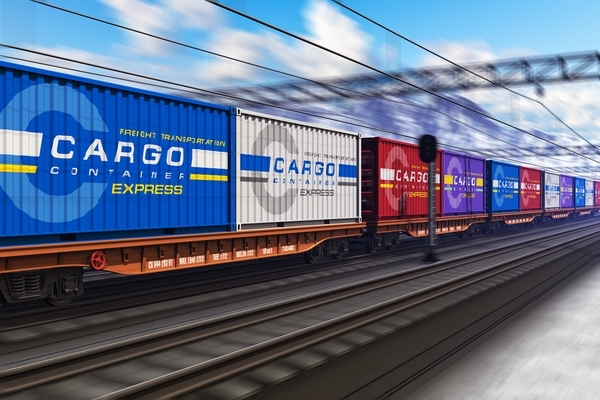
– Special flat wagons (S series) – wagons with a structure adapted for the transport of containers, vehicles, railway rails, and long loads.
– Refrigerated wagons (I series) – wagons with a body in the form of a closed, airtight, thermally insulated box, usually equipped with cooling devices. They are intended for the transport of perishable food products and other goods requiring transport at a reduced temperature.
– Special wagons (U series) – with highly varied bodies: with an opening roof, tank wagons for the transport of liquids (petroleum products, chemical products).
The article contains 18,290 characters.
Source: Logistyka Magazine