









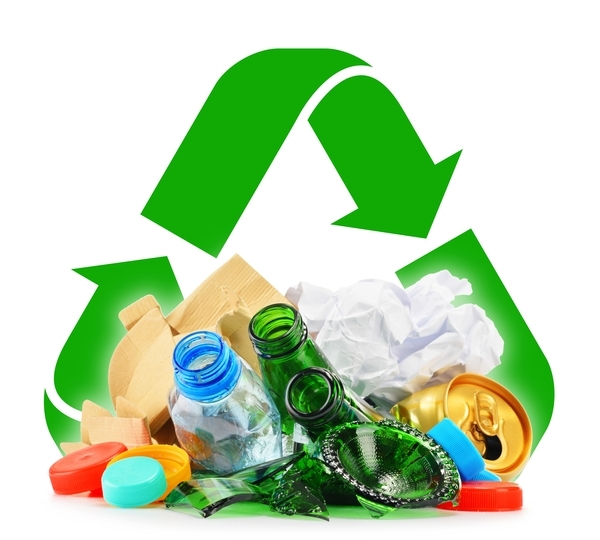
Waste is generated at all stages of economic activity, including supply, production, and distribution. It can be compared to resources that ensure the continuity of economic processes. The main task of waste logistics is to build and implement logistics supply chains connecting the places where waste is generated with the places where it is disposed of.
It consists of the following stages:
- waste collection and sorting,
- waste transport and storage,
- waste processing and disposal,
- storage and movement of secondary raw materials.
Waste logistics should also stimulate the development of environmentally friendly, economically viable technologies for packaging production and the disposal of all types of waste.
Rationally managed waste can be a source of many alternative raw materials, which, in an era of shrinking global natural resources, can mean great economic benefits and access to partially renewable sources. In the context of recovering secondary raw materials and waste disposal, an integrated logistics approach guarantees high process efficiency and high cost-effectiveness.
National and international legal regulations
According to the European Agreement concerning the International Carriage of Dangerous Goods by Road (ADR), the term “dangerous goods” refers to materials and objects whose international road transport is prohibited or permitted under certain conditions. ADR is a European agreement concerning the international carriage of dangerous goods by road, drawn up in Geneva on September 30, 1957, developed and issued by the Inland Transport Committee, and ratified by Poland in 1975. The provisions of this agreement are subject to amendment on a biennial cycle. The agreement obliges every entrepreneur involved in the transport of dangerous goods, including waste, to cooperate with a so-called dangerous goods safety adviser. Their task is to assist in meeting the requirements contained in the agreement, prepare annual reports for the provincial governor, and implement safety procedures and instructions. The ADR agreement consists of the agreement text itself and two annexes, A and B. The annexes are an integral part of the agreement and contain provisions specifying the conditions for the transport of specific types of dangerous materials. Annex A contains the classification of all dangerous materials into classes and specifies the conditions for packaging and labeling of goods, packages, and vehicles. Annex B specifies:
- requirements for vehicles (tankers, trailers, containers),
- additional vehicle equipment,
- requirements for the vehicle crew,
- transport documentation,
- requirements for vehicle supervision and restrictions on passing through tunnels.
The article contains 17,120 characters.
Source: Logistyka Magazine