









The pre-Christmas period is a time of intense preparation. On-demand shopping influences the rising expectations of buyers who want to purchase and receive ordered goods quickly. This puts immense pressure, especially before the holidays, on stores, logistics operators, courier companies, and e-commerce businesses. Most of them treat the pre-Christmas season as the most important retail period, on which the achievement of annual sales results often depends. Moreover, in the second half of each year, they meticulously prepare for it operationally, both in terms of human resources and technology.
Stores and logistics companies are dynamically developing delivery options. The “click and collect” mode, which involves ordering goods online and then picking them up in brick-and-mortar stores, is becoming increasingly popular among customers. Many retail outlets decide to offer free delivery or reduce shipping fees, wanting to encourage consumers to visit stores in the hope of selling additional products. Currently, “click and collect” accounts for one-sixth of the entire online product delivery market.
The results of the Global Shopper Study, conducted on behalf of Zebra, show that in the EMEA region, more than three-quarters (76 percent) of retail industry decision-makers believe that accepting returns and managing returns of online orders pose a significant challenge for them. According to the study, more than half of the surveyed retail store employees (55 percent) admit that their companies struggle with staff shortages, and 49 percent feel overworked. Certainly, the cited percentages would be even higher if the research group also included back-office staff who take care of stocking shelves and fulfilling orders during pre-Christmas periods and Black Friday promotions.
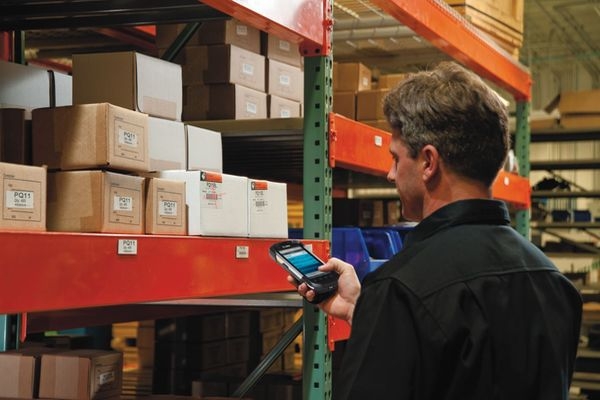
It is also worth considering the situation of warehouse workers and couriers who handle packing, shipping, and delivering parcels, as it is thanks to their hard work that Christmas gifts reach consumers on time. Thinking about a distribution center during peak season, it is easy to imagine a stream of packages moving on conveyor belts and employees working in a hurry – moving, packing, and scanning shipments. It seems that in such a situation, employees often complain about injuries related to the need to lift heavy packages. However, as it turns out, one of the most common causes of physical ailments in this professional group is RSI (repetitive strain injury), which is a set of injuries resulting from chronic overload. High-frequency scanning causes a “domino effect” that hits engaged employees. To counteract this, logistics companies and warehouses are investing in technologies that allow for higher personnel efficiency. As an example, one can cite ASICS Europe BV, a manufacturer of footwear and sportswear, which implemented Zebra Technologies TC8000 touch mobile computers in its European distribution center. The devices not only enabled an increase in productivity levels by more than an hour per shift but also received praise from employees who, thanks to them, perform as many as 2,400 scans per shift. The large screen and lightweight design of these models eliminate the need to bend down to verify the scan result, thereby contributing to improved work comfort.