








A 20 percent reduction in emissions caused by trucks weighing at least 7.5 tons by 2025 and 35 percent by 2030 is achievable, says CEO Jochen Thewes.
DB Schenker, a global logistics service provider and operator of Europe’s largest land transport network, has committed to tightening its carbon emission reduction target for vehicles weighing over 7.5 tons.
– I believe it can and must be done – states Jochen Thewes, CEO of DB Schenker, on the occasion of Deutsche Bahn’s “Green November” initiative. – Driving structural transformation in the automotive industry and the availability of alternative drive technologies in freight transport will make ambitious carbon emission reduction targets for vehicles of 20% by 2025 and 35% by 2030 absolutely feasible.
By joining the global EV100 initiative, DB Schenker recently decided to gradually transition its distribution fleet to electromobility. The goal is to equip all vehicles weighing up to 3.5 tons with electric drives or fuel cells by 2030. By that time, half of the vehicles weighing between 3.5 and 7.5 tons will also be powered electrically. Already today, DB Schenker uses an electric fleet in Austria, Italy, and Norway, as well as electric cargo bikes in a dozen European cities. It is necessary to take action, particularly regarding trucks weighing over 7.5 tons.
– Everyone, especially manufacturers, is obliged to take part in this initiative. We must make a long-overdue technological leap in the face of the impending structural transformation in the automotive industry – says Jochen Thewes.
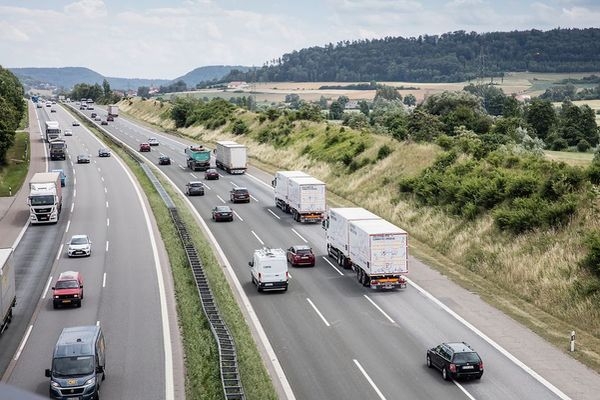
Furthermore, as part of a pilot project in Germany, in cooperation with MAN and Fresenius University, the effectiveness of digitally controlled integrated truck convoys (so-called platooning) is currently being tested. Together with the Swedish startup Einride, the world’s first fully autonomous truck was recently put into commercial use.