









The fifth chapter of the latest edition of the “Logistics in Poland” report contains over 60 pages of detailed analyses of the state of the Polish transport and forwarding market (rail, road, maritime, inland waterway, air, and intermodal transport). This chapter was written by such transport market experts as Mirosław Antonowicz, Zdzisław Kordel, Marek Grzybowski, Ryszard Rolbiecki, Maciej Stajniak, and Marcin Foltyński. We highly recommend reading this unique publication!
 Rail transport
In the Polish rail freight market, we can distinguish the following market segments in terms of their complexity, importance, or development potential: the stabilized full-train transport segment, the shrinking wagon and wagon-group transport segment, and the rapidly developing intermodal transport segment (mainly container transport). The rail freight market is in a mature phase with an evolutionary tendency to function as an oligopolistic structure due to consolidation and concentration processes on the supply side of transport services. Over the last dozen or so years, we have observed the dominance of road transport in the European freight market. This is particularly visible in Poland, where road transport has gained a number of preferences regarding the use of transport infrastructure. Road transport is practically growing year by year. After years of stagnation, rail transport recorded growth in 2017. In the opinion of many experts, the transport market in Poland grew dynamically in the period after joining the European Union. Unfortunately, despite the growth of the market during this period, rail freight volumes fell by 22%. The effects of the transport policy of the European Union and Poland are not satisfactory, and the barriers to technical interoperability, which are not being removed quickly enough, hinder the efficiency of transport and logistics operations. Therefore, the EC accepted the Fourth Railway Package, intending to carry out significant changes in important areas of the railway sector’s functioning, including solutions for railway infrastructure management, opening the domestic rail passenger transport market, and the interoperability and safety of the railway system. Although rail freight transport is an element of Poland’s integrated transport system, it does not play a dominant role in the land freight transport system. This does not favor the development of the concept of a sustainable transport system for Poland. Nevertheless, recent activities related to the EU financial perspective and the expenditure of approximately PLN 66 billion on the modernization of rail transport infrastructure raise hopes for reversing negative trends.
 Road transport
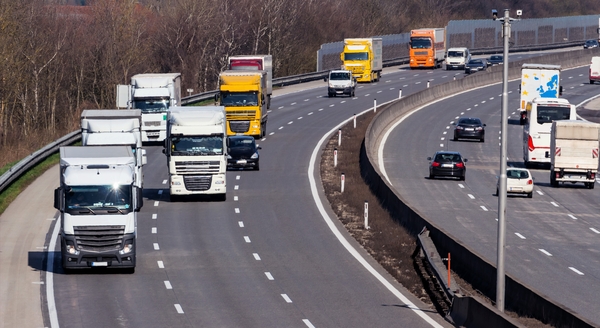
According to statistical data, the total length of public roads at the beginning of 2017 was 420,236 km, of which 69% were hard-surfaced roads and 31% were dirt roads. The general density of hard-surfaced roads at the beginning of 2017 was 92.7 km per 100 sq. km. To assess the road network in detail, it is useful to compare the number of kilometers and the percentage share of individual road categories in their total number. Comparing the number of kilometers of individual road categories, it can be seen that almost 60% are municipal roads. These are the roads of the lowest quality, with the least importance for the transport of people and goods. The next group is county roads, which account for just over 30% of all roads. This category is also used primarily for local needs. The most important in the entire road system are national and provincial roads, which unfortunately account for 4.7% and just under 7%, respectively. The presented statistics show the weakness of Polish road infrastructure, even though in recent years we have seen an increase in the number of national roads with the highest technical parameters, i.e., motorways and expressways. The development of national road infrastructure should be more effective, as European statistics confirm that the increase in the share of road transport in passenger and freight transport in Poland shows significant dynamics compared to the European Union. In 2014, the total number of public roads in Poland (hard-surfaced and dirt) was 417,026.0 km, and the density per 100 sq. km reached an index of 133.4. Depending on the indicators adopted (per 100 sq. km or per number of inhabitants), in terms of road network density in recent years, countries such as Sweden, Finland, Germany, and the Netherlands are in the same group as Poland. In the years 2000–2014, the number of hard-surfaced roads increased, albeit irregularly. In the period from 2000 to 2004, fluctuations in the number of kilometers are visible, while from 2004 there has been an increase in the number of kilometers of hard-surfaced public roads. Poland’s accession to the European Union was a factor stimulating the expansion of road infrastructure. In the case of motorways and expressways, dynamic development has been recorded since 2008. Currently, the technical condition of only about 61% of national roads can be described as good. It is also important to introduce new innovative solutions used in the construction of transport infrastructure, including the use of modern building materials with high strength and durability or the use of alternative materials and additional materials refining asphalt, concrete, and the road foundation.
 Maritime transport
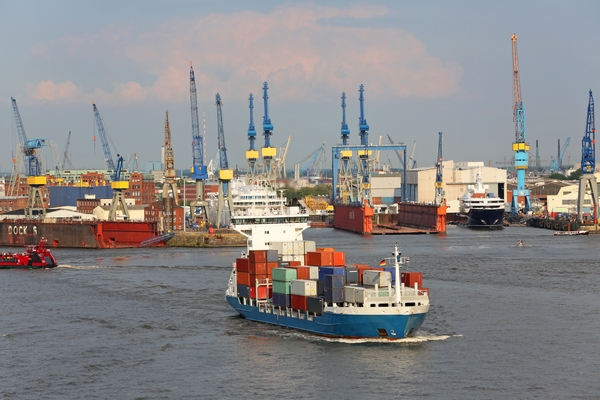
 of goods increased by 2.6% in 2016 and by 4.1% in 2017, as a result of which ships transported approximately 11.6 billion tons of bulk and general cargo across seas and oceans. The maritime transport market experienced a shock in 2016 after the bankruptcy of Hanjin Shipping. However, the freight market quickly recovered, and new consortia and alliances divided the ships and the market of the Korean shipowner. Despite the oversupply of the fleet, 2017 was more stable than previous years. The supply of cargo grew systematically. This is partly due to the increase in consumption in North America and Europe and consumer and investment demand in Asia. Active consumers and investors on all continents caused container transport between seaports to increase by about 5.2% in 2017. The driving force here was the United States economy, thanks to which transport on connections between Pacific ports increased by 8% during the first 3 quarters of 2017, while transport between Far East ports and Western Europe approached 5%. At the beginning of 2017, the world fleet included 93,161 ships with a total deadweight of 1.86 billion tons. Since the beginning of the century, a growing supply of ships and, with them, cargo space has been observed in the maritime transport market. In 2016-2017, shipowners increased their fleets by over 3% per year. Despite the falling rate of fleet growth in many market segments, an oversupply of transport capacity was still recorded, which increased pressure to lower freight rates.
Inland waterway transport
The inland waterway transport market in Poland, similar to Western European countries, consists of two groups of companies: owners of single ships and multi-ship enterprises. The dominant part of the inland shipping market consists of companies employing from 1 to a few people, possessing several, and most often one ship purchased from former state-owned enterprises. The process of the dynamic emergence of this type of company has been observed since the 1990s in connection with the start of the process of liberalizing access to the transport market. Multi-ship enterprises in inland waterway transport are among the few, however, the subject of these enterprises’ activities is significantly expanded and goes beyond traditional purely shipping activities. Also, unlike owners of single ships dealing exclusively with the implementation of one-off transport orders, multi-ship enterprises provide so-called contract transport based on annual or even multi-year contracts with cargo managers. It is estimated that there are currently about 400 shipping companies operating on the inland waterway transport market in Poland1, including the two largest multi-ship enterprises operating within the OT Logistics Group: OT Logistics SA based in Szczecin and Żegluga Bydgoska sp. z o.o. in Bydgoszcz, and the share of these companies in the inland waterway transport market in Poland reaches 80%. As a result of the acquisition of the German shipowner Deutsche Binnenreederei AG based in Berlin by the OT Logistics Group in 2007, OT Logistics became the largest shipping group in Europe operating on the inland shipping market.
 Air transport
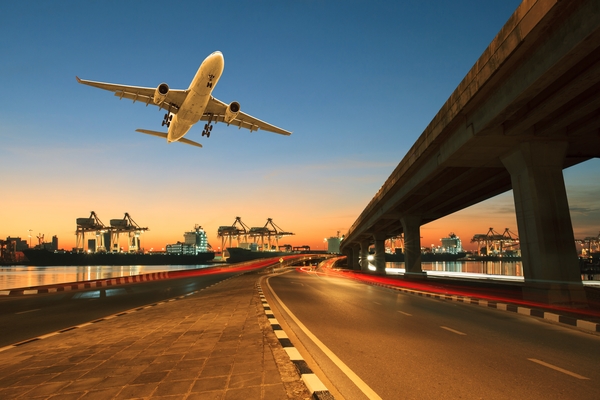
The air cargo market has huge potential. Only about 1% of the total number of goods in the world is transported by plane. However, air freight accounts for as much as 35–37% of the value of all transported goods. Therefore, it can be assumed that the role of air transport will grow. Air cargo transport measured on the basis of data from international Air Waybills in the world amounted to 53.5 million tons last year. Carriers from the Asia-Pacific region recently recorded an increase in demand for cargo transport by 5.6% with an increasing supply of 2.2%. North American carriers recorded an increase of 5.4% with an increase in supply of 2.2%, and European airlines recorded an increase in cargo transport of 5.0%, with an increase in supply of 3.2%. Many goods are produced in Poland that are standardly transported by air. These are parts for car production, pharmaceuticals, parts used for the aviation industry, or goods in e-commerce. In 2016, air cargo transport was the fastest-growing branch of transport, which recorded a 17% increase. The impact of airports on the economy in Poland is smaller than in many other countries, but we are a clear leader in the region. The airport network contributes to the creation of 4% of Poland’s GDP annually – mainly thanks to their stimulating influence on other areas of the economy. Airports also create over 440,000 jobs in the country. An undoubted obstacle to the development of the cargo market at Polish airports is the lack of sufficient infrastructure for cargo handling and the costs of handling by handling companies, resulting from the lack of competition and the small potential of the market. Poland is currently treated as a cargo supply area for other airports, and not as a place for the development of transport business.
Intermodal transport
Intermodal transport belongs to complex transport processes in which goods are moved in the same loading unit along the entire route from the sender to the recipient by means of transport of different branches of transport (at least two). The basic premise for their use by enterprises is the fact that it gives the possibility of using an optimal set of service and cost features characterizing various means of transport. The structure of freight transport in Poland in 2016, according to types of transport, indicates the total dominance of road transport – the vast majority of goods, as much as 84.2%, were transported in this way. In the same period, rail transport provided the transport of only 12.1% of goods. Other branches of transport had a small share in cargo handling. This situation – combined with the constant growth of trade (domestic transport, exports, imports, transit) – means that more and more communication routes, especially in road transport, are reaching their maximum capacity, and the effective and efficient organization of transport processes is becoming increasingly difficult or impossible. The continuous dominance of road transport in freight transport, the policy of the European Union, and the trend aimed at sustainable development – all this forces entrepreneurs and decision-makers to look for new solutions. In Poland – despite being located at the intersection of 2 European transport routes of the TEN-T network (North Sea Baltic and Baltic – Adriatic), which gives the possibility of developing transit transport – intermodal transport is used to a small extent.
(Full content of Chapter 5 in the attachment).
->> Read also the other chapters of the Report:
– Chapter 1 – Digitalization of transport chains
– Chapter 2 – Logistics in the Polish economy in 2016-2017
– Chapter 3 – Logistics market in Poland 2016-2017
– Chapter 4 – CEP market in Poland
– Chapter 6 – Warehouse market
– Chapter 7 – Assessment of the state of logistics in companies operating in Poland in 2016 and 2017
– Chapter 8 – Logistics education