









Increasing expectations of consumers who use smartphones in virtually every aspect of life have prompted retailers, manufacturers, and logistics companies to develop solutions based on technology.
The results of the Zebra “Future of Fulfilment Vision Study” show that a vast majority of respondents (89 percent) believe that e-commerce is driving the need for faster order fulfillment. The report indicates that 78 percent of logistics companies anticipate same-day delivery by 2023, and 40 percent declare that they expect delivery within two hours of ordering within a 10-year perspective. The study also found that inventory allocation, reducing the number of backorders, and inventory replenishment efficiency pose additional challenges for logistics companies in adapting to omnichannel commerce. To meet the demands of today’s customers, it is necessary to modernize warehouses to increase the productivity and efficiency of enterprises. It turns out that business owners are gradually moving away from Windows in favor of the Android environment, which streamlines warehouse operations, adapting them to the market situation.
Warehouse under the care of Android
The Android system in the enterprise version, familiar to many users, is a secure platform offering security management tools that allow warehouse IT departments to prevent data leaks and enforce compliance. Through them, IT managers can manage network configurations and apply corporate data protection policies. The Mobility DNA suite of applications was developed by Zebra to complement the Android OS with enterprise-class functionality – to increase the level of security. It contains a unique set of tools for managing goods, increasing productivity, and creating software. It was designed with easier integration and optimal business efficiency in mind. Hacker and virus attacks on smartphones and Android devices in previous years have led to improvements in software security levels. The platform ensures that devices, data, and applications are secure by restricting their use and encrypting devices. Furthermore, management APIs allow for policy control enforcement across the entire fleet of devices.
Advantages of using a popular interface in warehouse work
Faced with the challenge of ending support for Windows Mobile and the lack of a successor for warehouse devices, Android is becoming an attractive and alternative solution for business. Above all, it enables flexible working methods with many existing logistics systems without the need for modification. Solutions based on Windows Mobile will naturally be gradually withdrawn from the market and replaced by more modern solutions based on the Android operating system. It is worth remembering that Android is the most widely used mobile operating system in the world. In the era of ubiquitous automation, warehouse employees are increasingly using touchscreens with a graphical user interface (GUI) at work, which is a popular system among consumer-dedicated devices, while abandoning hardware that requires manual entry of long strings of numbers or codes. This change not only increases productivity but also influences the reduction of the probability of making a mistake.
Introducing system solutions based on well-known software to business-dedicated devices streamlines equipment operation.
The results of the “Zebra Warehouse 2020 Vision Study” illustrate that warehouse managers spend 50 hours training new employees to achieve maximum productivity. After implementing Android-based equipment, they estimate that they will shorten this time to 36 hours. Implementing the system on business-dedicated devices can facilitate the training of employees who are often hired for seasonal work.
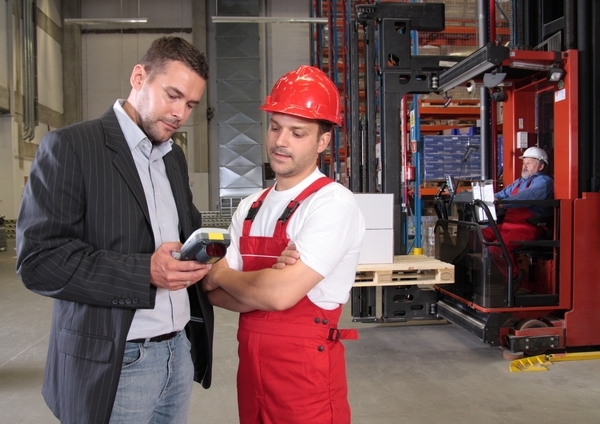
Examples of devices created with retailers, logistics companies, distribution centers, and warehouses in mind are mobile computers (e.g., Zebra MC3300). They enable increased efficiency and inventory management. The device is equipped with a large, readable touchscreen that facilitates the use of the full capabilities of the Android operating system. At the same time, it provides employees with the functionality they need to optimize the time taken to learn the equipment’s capabilities and increase efficiency in a rapidly changing back-office and warehouse environment.
The benefits of using the Android system in enterprise-class mobile devices allow for increased employee productivity and accuracy in warehouse operations, with robust security and user-friendly functionality. They help companies gain a competitive advantage in areas of inventory management in a more efficient and accurate way, so they can meet the expectations of the market and customers operating in the realities of the on-demand economy.