








Real-time transport control is one of the main advantages of telematics. How does continuous monitoring support the work of carriers and drivers?
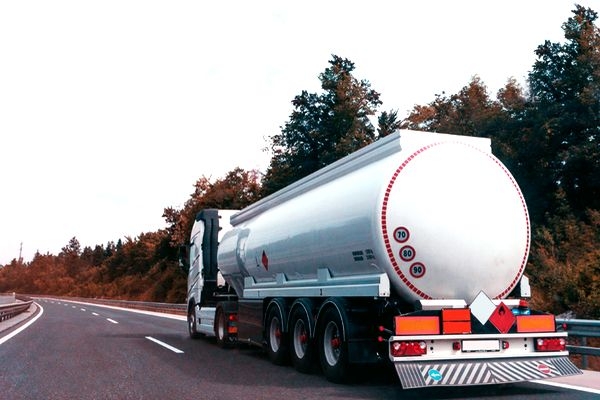
One of the most important changes in the so-called transport package (SENT), which comes into force on October 1st, will be the obligation to transmit geolocation data from means of transport carrying so-called “sensitive” goods on public roads and via the railway network. This will apply to vehicles transporting, among others: motor and heating fuels, lubricating oils, products containing ethyl alcohol, or tobacco dried, and it is imposed on both the carrier sending the transport on the route and the driver transporting the “sensitive” goods.
Carrier’s obligations
The new regulations are intended to ensure more effective control of goods indicated in the SENT system regulations. Failure to comply with this obligation can cost the transport company owner dearly. Financial penalties, which will be imposed from January 1, 2019, can amount to PLN 10,000.
The carrier is obliged to equip the vehicle transporting the goods with a device transmitting geolocation data. They are tasked with equipping the means of transport with a localization device on which software provided by the Head of the National Revenue Administration has been installed, or a so-called external localization system (ZSL), which collects and transmits current geolocation data of the means of transport, thereby monitoring the transport route. Additionally, the carrier should enter the locator number or the external localization system number in the notification.
Driver’s tasks
In the event that the means of transport has been equipped with a locator, the driver transporting “sensitive” goods is also responsible for certain aspects. Before starting the transport of goods in Poland or at the moment of crossing the Polish border, the driver is obliged to activate the locator, and after delivering the goods to the destination or leaving Poland, to turn off the device. In a situation where the locator or the external localization system proves to be faulty and this lasts for more than 1 hour, the driver is obliged to stop immediately at the nearest parking lot or rest area. Failure to comply with these obligations carries a penalty ranging from PLN 5,000 to PLN 7,500.
Additional facilities
In addition to the new regulations and high penalties for non-compliance, real-time monitoring of goods also comes with numerous benefits. Visibility of orders and loads, efficient flow of information, greater efficiency, and consequently cost reduction – real-time fleet monitoring is primarily support for the work of drivers and forwarders. The ability to verify the exact location of drivers is not only a convenience but also a guarantee of safety for drivers and the loads they carry. Additional functionalities correlated with the monitoring system, such as alarm functions in case of danger, provide additional transport security.
– Companies with large fleets are particularly aware of the need for fast and efficient access to a vehicle monitoring system, possible in real-time via mobile devices. They decide to cooperate not only because of top-down restrictions and fear of penalties, but primarily because of the awareness of the benefits that constant fleet monitoring gives them – explains Paweł Wloczek, Managing Director of WebEye Polska.
Telematics is not just monitoring
Telematics is not just real-time route monitoring. Its application in transport consists of transmitting diverse information via advanced wireless techniques. With one click, we know exactly where a given vehicle is, so the forwarder does not have to contact the driver to provide detailed information to the client. Telematics solutions therefore facilitate communication between the driver and the carrier sending them on the route, which helps in monitoring not only the route but also secures against attempted cargo theft or the risk of exceeding permitted driving time. They also help in route planning, monitoring fuel consumption, or controlling driving style. As a result, telematics helps save time and travel costs, resulting not only from lower fuel consumption but also from avoiding the need to pay penalties for unauthorized use of roads or exceeding driver working hours.