








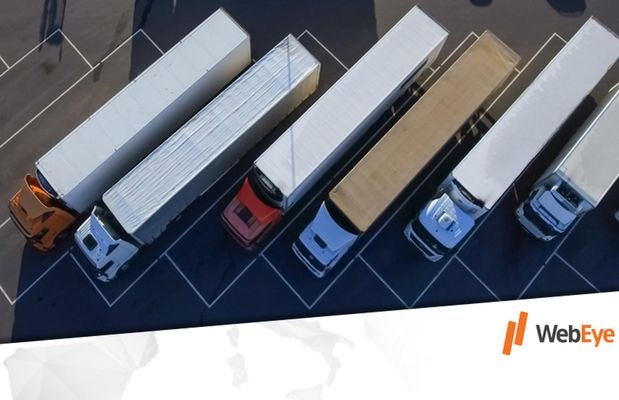
Losses resulting from cargo theft, repair costs, or penalties for delivery delays – these are just some of the costs generated by the theft of trucks. How can you secure transport to ensure the safety of employees and the goods being transported?
According to data collected by the German organization ASW Nord and over a dozen cooperating business associations, cargo theft from trucks occurs every 20 minutes in Germany. Consequently, nearly 26,000 trucks are robbed every year in our western neighbor’s territory alone, with the value of stolen goods amounting to 1.3 billion euros. Added to this are costs resulting from, among other things, penalties for delivery delays, repair costs, or production losses. This amounts to nearly 900 million euros annually. These data are particularly relevant for Polish transport companies. According to information from the Federal Association for Goods Transport, in the first half of 2017 alone, almost one-third of all kilometers traveled on German highways were covered by trucks from “new” EU countries. Polish trucks had the largest share in this group, covering half of the kilometers included in these statistics. In total, there are about 200,000 trucks from Poland on European roads, so it is worth taking proper care of the safety of the goods they transport.
Basic information
Route planning, especially when a driver is setting off on a route for the first time, should begin with getting to know the countries they will be passing through as well as possible. Warnings for drivers, dangerous areas, or secure parking lots are basic information that every driver should have before setting off. One should also not forget to prepare a list of the most important contacts that may be useful on the way to the destination, i.e., emergency numbers or contacts to Polish consulates, through which we will be able to obtain help in case of theft.
Safety procedures
Every transport company sending its employee on a long route should familiarize them with a previously prepared internal policy. It should include instructions on how to act in situations that threaten the safety of the driver and the goods being transported. Every situation a driver encounters on the road is different, so they must make the final decision. However, generally accepted rules will make it easier for them to act appropriately in a dangerous situation. Suspicious, staged accidents on the roadside, forced stops by unmarked cars, or attempted robbery in a parking lot are just examples of scenarios that we should take into account.
Stops and unloading
Every driver should also have a list of verified parking lots where they can rest after their working hours without compromising their safety or the risk of theft of the transported cargo or fuel. Drivers can check a list of over 22,000 European parking lots intended for trucks, among other things, via the WebEye Navigator application, integrated with the European Truck Parking Europe platform. Thanks to it, drivers can check, among other things, a list of parking lots in a specific country or city, driving directions, or the ability to search for a stop based on specific services, such as: access to accommodation and restaurants, gas stations, showers, or the ability to use the internet or an ATM. Additional security is also provided by access to 27,000 confidential tips related to industrial areas.
Technologies supporting safety
In the event of a real threat, a driver is usually unable to assess how dangerous the attacker is or how many people they are dealing with. In such a situation, alarm technologies will ensure the safety of the driver and the transported goods. Every truck should have an anti-theft lock installed, which will save some time before the police arrive. Telematics solutions also help in preventing theft.
– Alarms triggered by sensors in the vehicle, monitoring of cargo space doors along with signaling their opening, or a cargo tarpaulin lock that triggers an immediate alarm in case of damage are just some of the tools that increase transport safety during an attempted break-in. Transport companies can also use a panic alarm located in the driver’s cabin, which, when activated, does not give any external signs. In this way, the alarm is visible in the system, and the company also receives information about the incident via email or SMS, so it can react immediately, even before the thief realizes that the appropriate services have been informed about the attempted theft – explains Paweł Wloczek, Managing Director of WebEye Poland.