








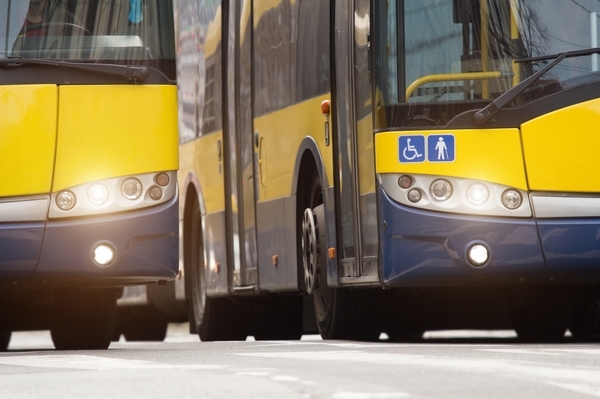
Within the next few months, 3 prototypes of electric vehicles prepared by RAFAKO SA will be ready. Among them, a school vehicle version is also being prepared as an alternative to the traditional school bus.
– A company that does not keep up with the changing environment and does not adapt to new times must disappear. We are not afraid of change, and the RAFAKO electric bus project is the best proof of this – says Agnieszka Wasilewska-Semail, President of the Management Board of RAFAKO S.A.
The company is currently working on designs for prototype vehicles in appropriate market configurations, prepared for testing in various traffic conditions. Thanks to field tests, it will be possible to select optimal drive and battery parameters, analyze energy management software, maximize performance, and minimize energy consumption.
– Our project is being created entirely from scratch, rather than as a result of adapting a combustion vehicle structure to the needs of an “electric” one. Thanks to this, our solution takes into account all the specific needs of an electric drive and utilizes the latest trends in the global market, giving the new vehicles advantages that will be able to meet high technical challenges and customer requirements – comments Michał Maćkowiak, project leader at RAFAKO S.A. – In our country, there is a discussion about the costs and ecology of generating energy to power electric vehicles, however, recent proposals suggesting that energy prices for households and for charging electric vehicles at night should be significantly lower may lead to increased interest in these vehicles.
RAFAKO has so far been known mainly as a manufacturer of power boilers and installations for power plants, combined heat and power plants, and waste incineration plants. For the past two years, a team responsible for creating the electric bus project has also been established there. During this time, the company has conducted an in-depth analysis of the bus market and established cooperation with design and research companies as well as key manufacturers in the automotive market.
– Electric vehicles are quiet and do not pollute the air, which significantly improves the quality of life in cities. Another argument is the specific nature of bus usage in urban traffic – comments Michał Maćkowiak. – Traveling by public transport involves frequent stops, and the combustion engines most commonly used in buses wear out the most and consume the most fuel precisely when starting from a standstill. Electric motors are much more efficient and dynamic in this respect, and additionally, they offer the possibility of energy recovery during braking and allow for smooth acceleration without jerking across the entire speed range, making electric buses more comfortable.
We congratulate RAFAKO on their consistency in achieving their set goal and wish them a successful start in the demanding electric vehicle market.