








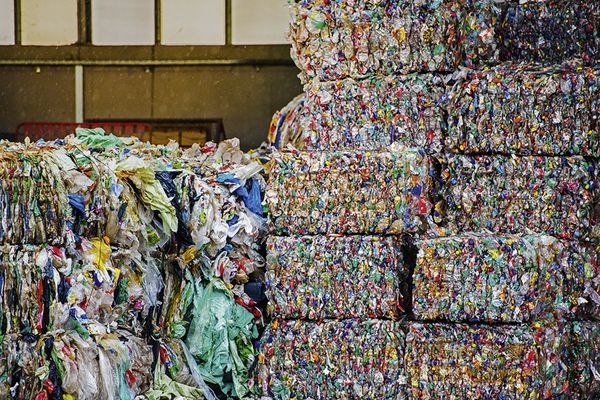
Packaging from your favorite cosmetics: tubes, jars, sachets. Plus wooden pallets and protective film, which are the packaging used to transport creams, shampoos, and lotions. And then there are paper boxes and labels. They all look beautiful and make our lives easier, but at the same time, their production consumes precious natural resources. The locally operating company AVON Operations Polska decided to use its own example to study how recycling helps save natural resources, and it has concrete results.
– We summed up all the packaging we recycled, and it turned out that we are saving thousands of tons of resources – says Christof Vollstedt, Director of the AVON Operations Polska factory, with pride.
How much exactly? In 2016 alone, this figure amounted to 8,648 tons of primary raw materials. That is equivalent to the takeoff weight of 15 Airbus A380 aircraft. These results are confirmed by INTERSEROH, a packaging recovery organization that handles recycling and recovery of packaging waste for AVON.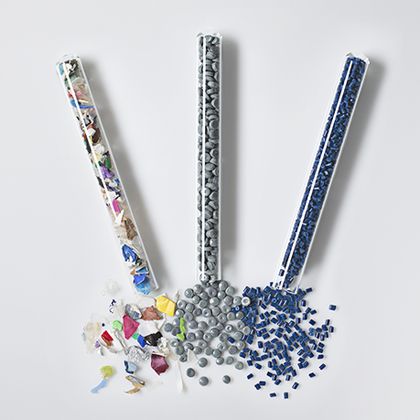
– Plastics, although there are hundreds of them, are collectively called plastic in common circulation. Plastic production requires crude oil. Its extraction, in turn, entails water consumption and greenhouse gas emissions – explains Krzysztof Hornicki, an environmental protection expert at Interseroh Polska. – However, recycled plastic waste does not deplete oil resources and requires significantly fewer other raw materials to be turned into new plastic products. This is the resource saving that results from recycling.
The situation is similar with other raw materials – paper, aluminum, glass. Their primary production, based on cutting down trees and extracting bauxite and quartz sand from the earth, is a major burden on the environment. Meanwhile, equally good results can be achieved by processing packaging made of paper, aluminum, and glass that has already been produced once. To obtain reliable data on its ecological results, AVON undergoes certification as part of the resources SAVED project conducted by Interseroh. Thanks to a conversion method developed by the renowned Fraunhofer UMSICHT Institute, it is possible to check how many natural resources remain  untouched thanks to the recycling efforts of a specific company. In addition to the mass of saved resources, the certificate also states how much greenhouse gas emissions were reduced thanks to eco-friendly actions. In 2016, AVON Operations Polska reduced greenhouse gas emissions by 1,643 tons. Such numbers are hard to imagine, but if we assume that an average driver emits 2,645 kg of greenhouse gases per year while driving a car daily, it is easy to see that AVON’s effort offsets the negative impact of 621 cars.
– At one end of the packaging life cycle is the extraction of raw materials, which is our role as a manufacturer to ensure as few of these resources are extracted as possible. At the other end is the processing of packaging waste – here the role of consumers is particularly important, because proper waste sorting is what allows it to be effectively recycled. Separating plastics from glass and paper ensures that individual waste streams are clean and easier to reuse – says Christof Vollstedt from AVON Operations Polska. – The results fire the imagination: untouched natural resources with the mass of 15 airplanes, offsetting the impact of over 600 cars on the atmosphere. This is our joint effort! – emphasizes the factory director.