









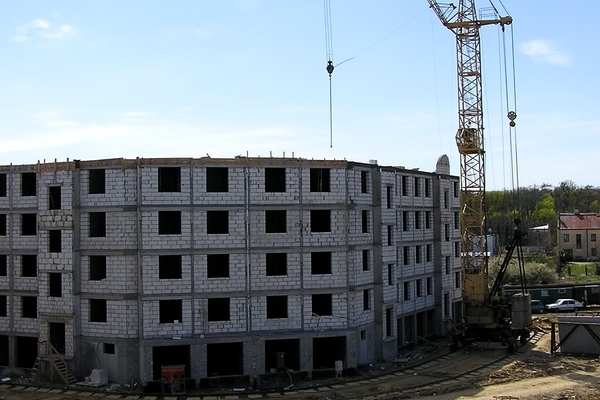
One of the fundamental stages of the investment process is professional investment planning. As part of this stage, it is essential to value construction works based on available design documentation. The more accurate the documentation, the more factual the cost estimate. The aforementioned calculation includes labor costs, material consumption, and equipment operation, which means it takes into account elements of logistics, i.e., transport.
The method of including transport in the valuation of construction works varies depending on the scope in which this issue is considered (e.g., equipment operation on the construction site, equipment rental, material transport, etc.). The purpose of this publication is to highlight activities related to transport and equipment operation and to present methods for their calculation in construction cost estimates.
Specifics of construction production
The connection between the construction industry and logistics results primarily from its specifics. Construction production is characterized by certain features that significantly influence its individual character. This specificity manifests itself both at the planning stage and in the implementation phase. Such basic features include a long implementation period and a significant degree of complexity in the construction process. The investment implementation time depends primarily on its nature and the degree of use of modern technologies. One cannot forget about the entire investment process, within which the critical stage of planning and programming the investment must be mentioned. Every investment at the planning stage requires obtaining all necessary permits, agreements, opinions, expert reports, as well as determining the estimated value of the work to be performed. The success of the entire venture depends on their quality and the adopted solutions already at the planning stage. Initially, costs are determined tentatively. As the scope and degree of completion of the investment are specified, costs can be determined more accurately (labor and equipment input). Hence, it is often emphasized that the investment process is characterized not only by the complexity of tasks but also by capital intensity (costs related to implementation) and time consumption (the period of preparation and implementation of the venture), which requires a comprehensive approach to management. The goal of management is to use available methods to achieve the set goals of the venture, which is the implementation of the investment within the established time and within the adopted budget (e.g., based on a cost estimate). The realization of these goals is possible thanks to the unification of processes and the identification of sequences of repeatable actions aimed at standardizing the management process in terms of design and execution. Another feature of construction production is the necessity to meet a large number of legal requirements (resulting, among others, from the Public Procurement Law – tenders, negotiations, the method of cost calculation using public funds).
The immobility of the construction product is also associated with the specifics of construction. This is related to location conditions, referred to in the literature as the immobility of the product (i.e., the structure). Every investment is strictly tied to the place of execution. The diversity of objects results from the difficulty of standardization, their uniqueness, and often the one-off nature of given implementation conditions. Despite an identical construction design, the same assembly team, the same execution technology, etc., there are no two identical implementations.
The article contains 24,610 characters.
Source: Logistyka Magazine