









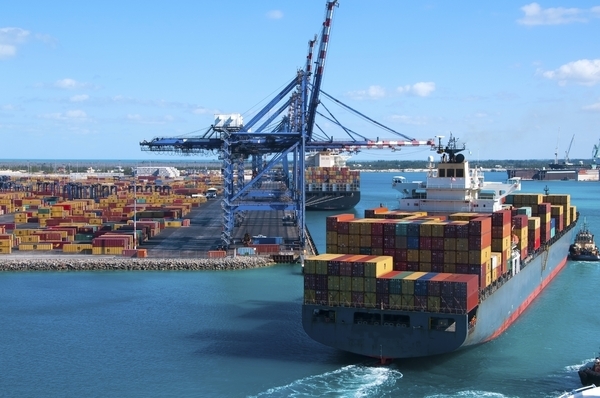
A company moves goods from a warehouse in Poland to a warehouse located in Egypt. It then distributes the goods to its customers in Egypt and outside Egypt. The movement takes place under Incoterms FCA rules. The company treats such transactions of moving goods to its warehouse outside the EU as an export within the country for VAT purposes and settles them as such. However, is this the correct procedure? Should such transactions be settled as an export?
Expert response: To answer the question asked, one must start by indicating what is subject to VAT. According to Article 5(1)(1) of the VAT Act, the following are subject to tax on goods and services:
– paid supply of goods and paid provision of services within the territory of the country;
– export of goods;
– import of goods into the territory of the country;
– intra-Community acquisition of goods for consideration within the territory of the country;
– intra-Community supply of goods.
However, export within the meaning of the VAT Act is the supply of goods dispatched or transported from the territory of the country outside the territory of the European Union by:
– the supplier or on their behalf, or
– the purchaser having their registered office outside the territory of the country or on their behalf, excluding goods exported by the purchaser themselves for the purposes of equipping or provisioning recreational vessels and private aircraft or other means of transport used for private purposes
– if the export of goods outside the territory of the European Union is confirmed by the competent customs authority specified in customs regulations (Article 2(8) of the Act).
According to the Individual Interpretation of the Director of the National Tax Information of February 19, 2018 (0115-KDIT1-3.4012.849.2017.2. MD), “the tax on goods and services is a tax of a territorial nature. Only those activities that are recognized—based on the provisions on the place of supply—as performed in a given country (territory) are subject to it in that country. Therefore, determining the place of supply determines the place of taxation.” The place of supply of services, on the other hand, is regulated in Chapter V of the VAT Act. According to Article 22(1) of the VAT Act, the place of supply of goods is, in the case of:
– goods dispatched or transported by the supplier, the purchaser, or a third party – the place where the goods are located at the time the dispatch or transport to the purchaser begins;
– goods not dispatched or transported – the place where the goods are located at the time of supply;
[…].
Thus, the situation described in the introduction to this article looks as follows: the export of goods takes place from Poland to Egypt, where the goods are exported, export customs clearance is performed in Poland, the IE599 message is generated at the port where the container with the goods is loaded onto the ship, and then the goods arrive at the port of destination, where they are unloaded, the tax declaration is made and customs duty is paid, and then they are delivered to the company’s warehouse, from where the goods are distributed to the company’s customers. In light of tax interpretation no. 0115-KDIT1-3.4012.849.2017.2. MD, in the factual state presented in this way, the principle of territoriality applicable in the VAT system should be applied. According to it, the export of these goods from the territory of Poland to a warehouse located in the territory of Egypt does not involve the transfer to the customer of the right to dispose of the goods as an owner. The transfer of this right takes place after the import is carried out by the company in the territory of Egypt, i.e., at the moment the goods are released from the warehouse to that customer. However, the disposal of these goods with the effect of transferring the right to dispose of them as an owner to the customer is not the result of a so-called movable supply, but is the result of a so-called immovable supply, i.e., one where the specific goods are neither dispatched nor transported. According to the cited opinion, “the case is subject to Article 22(1)(3) of the Act, according to which the place of supply of goods (which may also mean the place of their taxation) is the place where the goods are located at the time of supply.”
To summarize, therefore—the transactions carried out by the company described in the introduction are not subject to VAT in the territory of Poland, including in particular as an export of goods.
Legal basis:
Legal status of the publication (date): 2018-04-09