








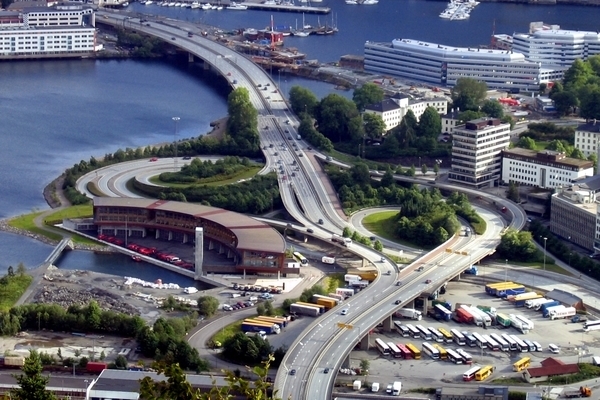
Cities are nothing more than a system of interconnected vessels. For their proper functioning, it is necessary to have undisturbed cooperation between all the elements that make them up, and efficient interaction between these organisms. Finding a way for cities, inhabited by over 53% of the world’s population, to function in an intelligent and efficient manner is the key to success for their proper development.
This is especially true given that scientific forecasts indicate that by 2050, at least 75% of the world’s population will live in cities. The recipe should be close cooperation between businesses, administration, industry, the scientific sector, and society operating in their areas, with the aim of improving the functioning of cities and modernizing them. Undisturbed cross-sectoral cooperation between various public-private entities is a sine qua non condition for the effective implementation of the smart city concept, regardless of the adopted interpretative scope of this term.
In terms of considering the needs of residents, a smart city is a set of optimized conditions ensuring a high quality of life for its inhabitants, efficiency and reliability of technical infrastructure, and effectiveness in managing natural and technical resources. A smart city must appropriately combine social capital, organization, and technical infrastructure, including transport and ICT systems, to create the most convenient conditions for functioning within it.
Currently, there are many definitions of a smart city. However, they differ in where they place their emphasis. The majority focus on technological issues of urban development, while a minority focus on social aspects. […] The smart city concept is closely associated with terms such as: smart government, smart buildings, smart retail, smart water & food, and smart safety. In particular, however, issues such as smart mobility or smart grid, i.e., power systems where the operating principle is analogous to the interaction between cities. For proper functioning, constant communication between energy market participants is necessary. It is about providing energy services while simultaneously reducing their costs and increasing efficiency. An important task facing cities in this context is the modernization and optimization of their transport systems on the one hand, and the power grid on the other. The details of these concepts are being worked on by the SmarCityTransportation and SmartGridCity teams specially appointed by the European Commission.
The article contains 45,920 characters.
Source: Logistyka Magazine