








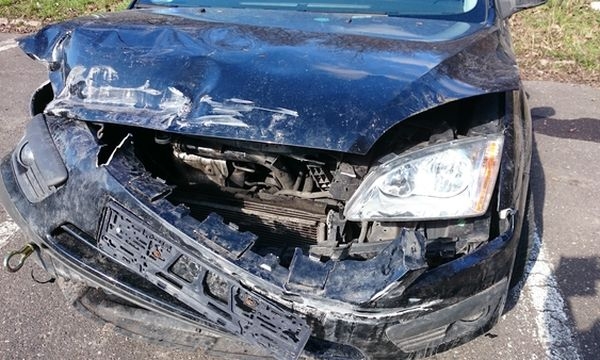
In 2017, the police stopped 109,000 drivers under the influence of alcohol (after consuming alcohol – from 0.2 to 0.5 per mille in the blood, as well as intoxicated – over 0.5 per mille). Importantly, their numbers are decreasing year by year. Just 5 years ago, 163,000 drivers were stopped, and in subsequent years 141,000 (2014), 129,000 (2015), and 116,000 (2016). The downward trend is certainly encouraging, but it is hard to ignore the fact that this still totals 658,000 people stopped by the police for driving under the influence of alcohol. Between 2013 and 2016, drunk drivers caused an average of over 1,800 accidents annually. Nearly 1,000 people died in them, which accounts for 8% of all road traffic accident victims during that period.
If a driver under the influence of alcohol causes an accident, they must be prepared for the court to impose a penalty. That is not all; they will also have to pay out of their own pocket for damages caused to the health and property of the victims – regardless of whether they had mandatory third-party liability (OC) insurance or not.
– The principles of third-party liability insurance for motor vehicle owners are derived from the Act on Compulsory Insurance. When the perpetrator of damage who holds a policy was under the influence of alcohol at the time of the incident, the insurer will pay the due compensation to the victims, but will seek reimbursement of the paid compensation from the intoxicated driver. This is called insurance recourse. In 2017, Compensa recorded approximately 300 cases where the basis for recourse against the perpetrator was causing damage while under the influence of alcohol – says Rafał Mosionek, Deputy CEO at Compensa TU S.A. Vienna Insurance Group.
What exactly does the law say?
The above principle follows from Article 43 of the aforementioned Act: “An insurance company has the right to claim reimbursement from the driver of a motor vehicle for compensation paid under the third-party liability insurance for motor vehicle owners if the driver caused the damage intentionally or while under the influence of alcohol or under the influence of intoxicants, psychotropic substances, or substitute agents within the meaning of the regulations on counteracting drug addiction”.
The insurer has the right to act in the same way in several other situations:
• when the driver obtained the vehicle as a result of committing a crime,
• did not have the required qualifications to drive the vehicle (except in cases involving saving human life or property, or pursuing a person immediately after they committed a crime),
• fled the scene of the incident.
The conclusion is simple: a perpetrator of an accident who caused damage while under the influence of alcohol should expect a bill for their actions. If they do not want to pay, the insurer will take steps to recover the amount of the paid compensation, including referring the case to court.
– Compensation for traffic-related damages can be very high. It is easy to find examples of compensation payouts in the hundreds of thousands or even millions. I would like to remind you that in motor third-party liability insurance, the limits of financial civil liability for the owner or driver of a vehicle are 1 million euros for property damage and 5 million euros for personal injury per incident, regardless of the number of victims. These sums will soon increase to 1.22 million euros and 6.07 million euros, respectively. It can be said that anyone who drives a vehicle under the influence of alcohol simply deprives themselves of this protection – adds Rafał Mosionek.
Source: Compensa TU S.A. Vienna Insurance Group