









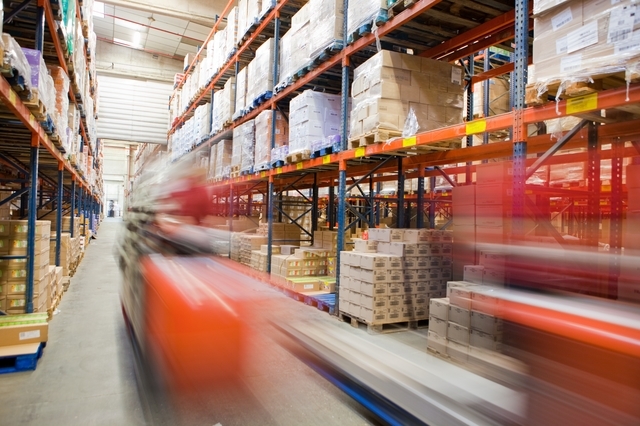
Warehousing is one of the fundamental elements of logistics operations that conditions the implementation of many functions in enterprises. It plays a major role in the entire production economy, the functioning of supply chains, and the activities of enterprises. The physical flow of logistics products is carried out between the warehouses of supply chain participants, which constitutes an essential element of it. The logistics function of warehousing emerges from the need to introduce transport cost optimization and to seek the best solutions in supporting this system.
Integrated Management Information Systems (IMIS) have been present in enterprises around the world for at least a decade. They constitute the main source of information and support managers in decision-making. By enabling work to be performed in a new way, they are a source of innovation and organizational change. During their evolution, they have covered an increasingly larger functional area, enabling information support for subsequent spheres of an organization’s functioning. Undoubtedly, there is still great potential in the innovative application of modern management support packages, enabling enterprises to achieve better operational and strategic results.
A guarantee of success in an increasingly competitive and volatile market is the fast and flexible implementation of production processes. The related expectations force the enterprise to quickly adapt both to changes in its environment (competition) and to the demands of increasingly demanding customers. A guarantee of meeting these expectations, i.e., obtaining the desired management efficiency, is an appropriate IT system that integrates various areas of the enterprise’s activity and supports the decisions made there.
Characteristics of warehousing
The development of the economy at the turn of the 20th and 21st centuries changed the way industry and trade function. This entailed changes in the nature of warehouses, the requirements placed on them, and the functions they fulfill. The structure of inventory storage underwent fundamental changes. There was an increase in the importance of distribution warehouses with a simultaneous decline in the role of raw material warehouses. The time of warehouse operations is playing an increasingly important role. The systematic increase in commodity flows and the speed of their movement force continuous reorganization of warehouses and the introduction of new devices and equipment. There is constant development of warehousing technologies, IT systems, and automatic identification.
Warehousing is understood as the handling of warehouse management, i.e., registration of receipts and issues; analysis of demand for materials and raw materials, i.e., creating orders based on production plans, needs analysis, sales plans; registration of information about orders from customers and to suppliers, purchases, batches of goods, reservations, production; supply chain management.
One of the main tasks of warehousing is to isolate a certain amount of space allowing for the receipt, storage, as well as the issuance of goods.
The article contains 32,540 characters.
Source: Logistyka Magazine