








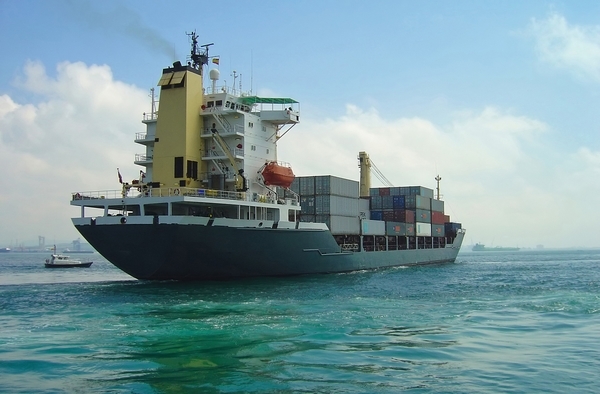
During the last economic crisis, shipowners sought strategies to survive this period. One of their responses to crisis phenomena, primarily to the oversupply of tonnage and rising fuel prices, was the reduction of vessel operating speed, known as slow steaming.
It turns out that even a small change in a vessel’s speed provides noticeable benefits in the form of fuel savings and the planning of vessel employment. This practice is not entirely new and was used by tanker owners as early as the 1970s during the fuel crisis. The purpose of this article is to present the essence of slow steaming, its origins, legal and technical limitations, and an analysis of clauses regulating the use of this practice in charter agreements.
Slow steaming – concept and premises
The practice of slow steaming can be implemented in various speed variants, usually defined as a percentage of the Maximum Continuous Rating (MCR) of the engine. In the basic variant, slow steaming is the operation of a vessel at approximately 60% engine load, down to speed reductions at loads below 20% MCR (this is known as ultra (extra) slow steaming). According to definitions developed by the Baltic and International Maritime Council (BIMCO), slow steaming is the operation of a vessel at a speed above the cut-off point for the ship’s engine auxiliary blowers, and ultra slow steaming is above or below the cut-off point. From an economic point of view, the goal of the slow steaming practice is not just the fact of speed reduction aimed at decreasing fuel consumption when market prices are too high, but establishing a vessel speed that, under given market conditions, allows the shipowner to maximize financial results or minimize losses, or to reduce fuel costs within the total vessel operating costs. After all, it is not the high price of fuel that makes slow steaming an optimal solution, but the low ratio of freight/charter rates to profits. Furthermore, this practice allows for the absorption of unused capacity and the rationalization of route networks.
Despite the drop in fuel prices, slow steaming is still practiced, and vessels, mainly container ships, adapted for low speeds are entering service. Although perceived primarily as a method allowing shipowners to limit the economic effects of an economic slowdown, it also has undeniable ecological benefits.
The article contains 25,220 characters.
Source: Logistyka Magazine