









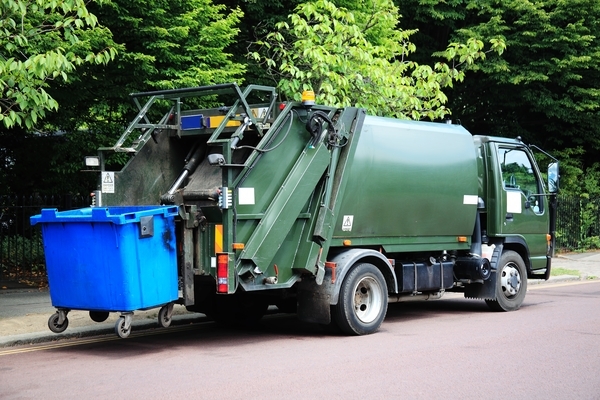
QUESTION FROM THE FORUM: I am troubled by a certain issue related to the registration of drivers’ working time using a tachograph in the case of service activities such as cleaning. When it comes to so-called “garbage trucks” with special bodywork and a moving wall, I have no doubt that this is a special vehicle that is not subject to the registration of drivers’ working time. What about other HDS/container vehicles that transport waste for their own needs from a discharge point to a disposal center? Is it necessary to use a tachograph in this case?
And a second question, concerning both garbage trucks and HDS – does the employer have an obligation to download data from digital tachographs and store it?
Expert response: I would like to start by thanking you for your question. It is very complex because the obligation to record drivers’ working time, download working time data from recording devices, and store this data is regulated not by one, but by several legal acts: EU Regulation No 165/2014 of 4 February 2014 on recording equipment in road transport; the Act of 16 April 2004 on the working time of drivers; EU Regulation No 561/2006 on the harmonisation of certain social legislation relating to road transport and the Regulation of the Minister of Infrastructure of 23 August 2007 on the frequency of downloading data from digital tachographs and driver cards and the conditions for storing this data. Furthermore, the issue of waste also arises here, which is regulated in subsequent legal acts, hence this analysis is exceptionally long.
Answering the questions, several issues should be noted:
If road transport is performed by a vehicle with a permissible total weight exceeding 3.5 tonnes, the vehicle should be equipped with a tachograph. This applies to both road transport and transport for own account. However, in accordance with Article 3 of Regulation No 165/2014 of 4 February 2014 on tachographs in road transport, Member States may exempt from the scope of the regulation the vehicles listed in Article 13(1) and (3) of Regulation (EC) No 561/2006. Poland has exercised this right, and in Article 29(2) of the Act of 16 April 2004 on the working time of drivers, categories of vehicles were included in the territory of the Republic of Poland that are excluded from the application of Regulation (EEC) No 3821/85 (currently: No 165/2014).
In accordance with Article 13(1)(h) of Regulation (EC) No 561/2006, regulations on tachographs do not need to be applied to vehicles used in connection with sewerage, flood protection, water, gas and electricity maintenance, road maintenance and control, collection of household waste and its disposal, telegraph and telephone services, radio and television broadcasting, and the detection of radio or television transmitters or receivers. According to judicial case law, the terms mentioned in this provision should be understood strictly and cannot be interpreted broadly.
Since the question mentioned cleaning and garbage trucks, one should consider what falls within the concepts of “road maintenance” and “collection of household waste”, to which tachograph regulations do not need to be applied:
According to Article 4(20) of the Public Roads Act, “road maintenance” means performing maintenance, cleaning, and other works aimed at increasing traffic safety and convenience, including snow removal and combating winter slipperiness. This concept therefore includes work consisting of repairing damage caused during the winter, cleaning the road and road strip, or, in light of case law, transporting gravel where road maintenance work is being carried out (such as the judgment of the European Court of Justice of 13 March 2014 in case C-222/12).
As for household waste, in light of judicial case law (judgment of the Provincial Administrative Court in Warsaw of 4 April 2011, VI SA/Wa 2601/10), it refers to waste from households and waste that regulations have classified into a similar category (of the same nature). In Article 3 of the Act of 14 December 2012 on waste, we find the definition of municipal waste, which includes waste generated in households, excluding end-of-life vehicles, as well as waste not containing hazardous waste from other waste producers which, due to its nature or composition, is similar to waste generated in households. In turn, in Directive 2008/98/EC of the European Parliament and of the Council of 19 November 2008 on waste, alongside the definitions of waste and hazardous waste, there is also (in Article 3) a definition of bio-waste, which in its meaning refers to biodegradable garden and park waste, food and kitchen waste from households, restaurants, catering facilities and retail premises, and comparable waste from food processing plants. The category of household waste is therefore not a uniform category in legal terms. However, it is recognized that due to the epidemiological threat, the concept of household waste also includes waste similar in nature or composition, i.e., food and kitchen waste from restaurants, catering facilities, and retail premises, and comparable waste from food processing plants. However, this cannot be waste from other producers, such as offices or other workplaces. The capacity of the category of waste generated in households therefore has its limits, which are determined by the nature and composition of this waste. It should be borne in mind, however, that if the road inspection takes the literal wording of the provision from Regulation 561/2006, which speaks only of collecting waste from households, the composition of the waste will not matter to them, only whether it comes from households or not. In such a case, if a penalty is imposed, one should appeal against this decision.
Therefore, only vehicles transporting waste from households or similar to them and vehicles involved in road maintenance do not have to record the driver’s working time. In a situation where a driver transports waste from households for part of the day and other waste, such as industrial waste, for part of the day, the time spent transporting waste from households does not have to be recorded, but the time for transporting other waste does. In such a situation, for the time of transporting household waste or in connection with street cleaning, the driver can set the OUT function in the tachograph, and this will be treated in the records as other work. I warn, however, that one must be careful when using the OUT function in the tachograph, as it works both with and without a card inserted, and then in the event of an ITD inspection, primarily on the road, but also in the company, we must document all activities so that there is no doubt until when the driving was “OUT OF SCOPE” in the OUT function and when it was no longer so.
To summarize this section: the exemption from recording the driver’s working time certainly does not apply to all “garbage trucks” as special vehicles, but only relates to the type of waste transported or the performance of work related to road maintenance, such as cleaning or snow removal.
The third issue you mentioned is transport for own account. First, I will explain what is included in this concept. According to Article 4(4) of the Act of 6 September 2001 on road transport, non-commercial road transport – transport for own account – is any movement of a vehicle on public roads with or without passengers, loaded or unloaded, intended for free-of-charge national and international road transport of persons or goods, performed by an entrepreneur as an auxiliary activity to their primary business activity, meeting the following conditions jointly:
a) motor vehicles used for transport are driven by the entrepreneur or their employees,
b) the entrepreneur has a legal title to dispose of the motor vehicles,
c) in the case of a loaded vehicle movement – the goods transported are the property of the entrepreneur or have been sold, bought, rented, leased, produced, extracted, processed, or repaired by them, or the purpose of the movement is the transport of persons or goods from or to the enterprise for its own needs, as well as the transport of employees and their families,
d) it is not transport within the framework of business activity in the field of tourism services.
Transport is performed as an auxiliary activity when the nature of the movement is subservient, auxiliary to the primary business activity conducted by the entrepreneur and when its performance serves solely to support the main activity by providing services or products only and exclusively for this entrepreneur (judgment of the Supreme Administrative Court in Warsaw of 28 September 2011, II GSK 905/10).
Importantly, this must be non-commercial transport, i.e., free of charge. This means that the entrepreneur is obliged to bear the costs of such transport on their own.
I also draw attention to the fact that case law is unambiguous regarding the concept of “employee”. This is a person employed on the basis of an employment contract, and not on the basis of a civil law contract (judgment of the Provincial Administrative Court in Warsaw of 11 May 2005, ref. VI SA/WA 2136/04, judgment of the Supreme Administrative Court of 24 July 2007, ref. I OSK 1254/06).
As for the legal title to dispose of the vehicle, in practice, this is a vehicle purchase agreement, usage, rental, leasing, lending, or lease. However, the agreement should explicitly indicate that the given vehicle can be used for performing road transport by the entrepreneur (judgment of the Provincial Administrative Court in Rzeszów of 17 January 2012, II SA/RZ 985/11).
Since we already know what transport for own account means, it is worth explaining what its consequences are. Well, according to Article 3(1)(2) of the Road Transport Act, the provisions of the Act do not apply to road transport performed by motor vehicles or vehicle combinations with a permissible total weight not exceeding 3.5 tonnes in road transport of goods and non-commercial road transport of goods. This means that you do not need to have a permit or license to conduct road transport, and according to Regulation 561/2006, due to the size of the vehicle, you also do not need to record the driver’s working time. However, for road transport performed by motor vehicles or vehicle combinations with a permissible total weight exceeding 3.5 tonnes, including non-commercial road transport of goods, the regulations of the Road Transport Act apply. In transport for own account for this type of vehicle, essentially identical standards for drivers’ working time apply as in road transport. The only exception is the possibility of applying the intermittent working time system, which is mentioned in the Act on the working time of drivers.
Please remember, however, that even if you have vehicles not exceeding 3.5 t and you perform transport for own account, an appropriate certificate together with an extract for the vehicle is necessary. The certificate for national non-commercial transport is issued by the district governor (starosta) appropriate for the entrepreneur’s registered office for an indefinite period. The certificate for international non-commercial road transport is issued by the Chief Inspector of Road Transport for a period of up to 5 years. In accordance with Article 87 of the Road Transport Act, while performing road transport for own account, the vehicle driver is obliged to possess appropriate documents.
The next issue you ask about is the obligation to download data from tachographs and store it. Data from a digital tachograph is generally downloaded by the entity performing road transport at least once every 90 days, and from the driver card every 28 days. The downloaded data must be stored in its original format for a period of at least twelve months, counting from the date of its registration in the digital tachograph or on the driver card. Derogations from the rule are regulated in detail by the Regulation of the Minister of Transport of 23 August 2007 on the frequency of downloading data from digital tachographs and driver cards and the conditions for storing this data. Answering the question: when, in light of the law, there is an obligation to record drivers’ working time, you, as an entrepreneur performing road transport, are obliged to download and store it.
Legal status of the publication (date): 2017-11-11