









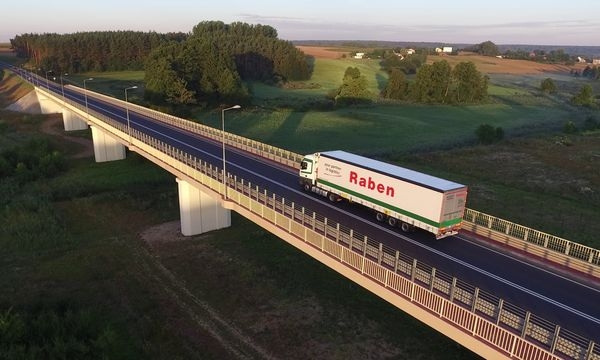
The transport services market is becoming increasingly competitive. Carriers are no longer able to compete by reducing margins. To adapt to the new situation, logistics companies must therefore look for other ways to limit transport costs. Who will win from this?
The days when a client had no knowledge of logistics solutions and relied solely on information obtained from friendly transport and forwarding companies are long gone. Nowadays, clients’ knowledge is broad enough that the moment of searching for a carrier is the final stage of finalizing a ready-made logistics solution. The carrier’s profile is already strictly defined, costs are precisely estimated, and one only needs to reach the right number of transport companies to ensure the best rates on the market.
– For logistics companies, this means they must become partners for the client, anticipate trends, and propose innovative solutions that will bring them real savings. Simple rate reduction by lowering margins is no longer possible, because in addition to the growing requirements of clients, the environment in which transport companies operate is also changing. In many cases, these changes directly affect the increase in the costs of transporting goods – says Aleksandra Kocemba, Intermodal Transport Manager at Raben Transport
Dynamic environment
The situation of carriers is worsened by the state of the driver labor market. It is currently estimated that there is a shortage of several hundred thousand drivers across the European Union, and this gap may grow even further in the coming years. Already in 2009, the European Parliament estimated that there was a 3.8% shortage of drivers in the Union. According to a PwC report, by 2023 there will be a shortage of 150,000 truck drivers in the German market, 50,000 are already missing in the British market, and over 100,000 in Poland.
– The law of supply and demand drives up wage increases for this professional group. If we add to this the new minimum wage regulations introduced by individual European Union countries, the ban on spending the weekend break in a truck cabin, and the draft of the new EU directive on the posting of workers, an increase in costs on the carrier’s side is inevitable – explains Aleksandra Kocemba from Raben Transport, and continues – For companies from Central and Eastern Europe, changes in national currency exchange rates against the euro are also proving burdensome. For example, the value of the single European currency expressed in Polish zloty fell by as much as 7.12% from December 2016 to May 2017! This means that offers submitted in tenders at the end of 2016 (most often calculated in euros) became unprofitable in May. During this time, Polish carriers managed to lose 32 groszy on every euro of their offer!
The best organized win
To operate effectively in the new situation, logistics companies are looking for cost reductions by using knowledge and more efficient planning of transport processes. One such solution is synchromodality. Unlike a traditional order, the client does not contract a specifically defined means of transport or departure time here. The logistics operator chooses the optimal means of transport, route, and transport time themselves – but in return, they offer a lower price or greater transport capabilities. What savings can such a solution bring?
– For one of our clients, who commissions the Raben Group for about 400 loads to 118 unloading points in 22 countries over two months, the transition to synchromodality brought a 20% cost reduction! All this, of course, with 100% on-time delivery – says Aleksandra Kocemba.
Another solution allowing for cost limitation is short-term partnerships between competing logistics operators. Within their framework, companies use each other’s networks (most often rail). This helps to limit the problems of unbalanced cargo flows and low availability of transport means, and for the client – to limit expenses and have access to a wider range of solutions.
New technologies are the key to the future
A way to reduce costs is also the application of modern technology in vehicles. An example is the topic of integrated convoys of autonomous vehicles, which are not only being tested but are already carrying out line transports in Singapore. No less interesting a solution is installing engines powered by gas – liquid LNG or compressed CNG – in trucks.
– Increasing vehicle load capacity can also influence cost reduction. Although European law limits the use of mega-trucks, the railway is eager to use such solutions. An example could be the MARATHON project, intended to create gigantic freight trains – explains Aleksandra Kocemba.
The first such train was formed in 2014 in France, connecting three sets carrying goods from Germany to Spain. The efficiency of the 1524-meter-long set, which weighed as much as 4026 tons, proved to be high. The cost per ton-kilometer was reduced by as much as 40%, and the entire transport by 30%! It is also promising that such a solution allowed for a 5% reduction in energy consumption compared to traditional transports.
In the end, the Client always wins
In the logistics industry, innovative solutions very quickly become the standard. The same will certainly be true for some of the mentioned ways of limiting transport costs.
– In the TSL industry, the biggest winner in the competition between operators is always the client, who gets an even cheaper, more reliable, and better-tailored service to their needs – concludes Aleksandra Kocemba.