









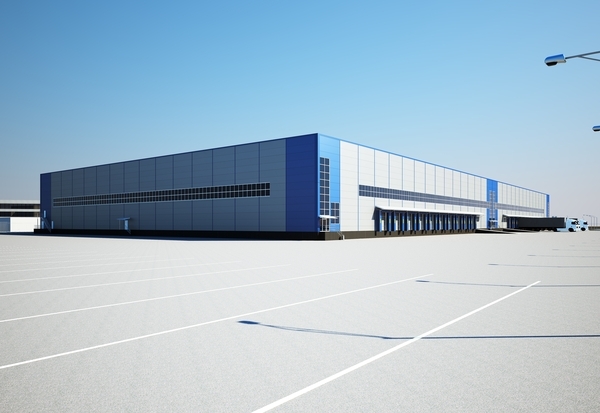
The warehouse real estate sector is in excellent condition. From January to the end of June 2017, over 1.82 million sqm were leased, of which 70% were new lease agreements and expansions. Developers are preparing further investments, resulting in 1.71 million sqm of warehouse space under construction and 720,000 sqm delivered in the first 6 months of this year. The development of the sector is supported by changes in sales models as well as a good economic climate in Western Europe – according to the AXI IMMO report summarizing the first half of 2017 on the warehouse market.
Demand
In the first 6 months of 2017, a total of over 1.82 million sqm of modern warehouse space was leased, which is historically the best result for the first half of the year. Contracts were signed for an area 32% larger than in the same period of the previous year. 70% of the transaction volume consisted of new lease agreements and expansions.
– The high level of demand proves the good condition and further dynamic growth of the sector. The best result was recorded in the Central Poland region, where 444,000 sqm were leased under just 16 lease agreements. Three of them accounted for as much as 52 percent of the total leased area in the region. These are contracts for BTS investments by companies: Castorama (100,000 sqm), BSH (79,000 sqm), and OBI (50,700 sqm). Upper Silesia (401,000 sqm) and Warsaw (392,000 sqm) also made it to the podium – comments Anna Głowacz, Director of the Industrial Department at AXI IMMO.
In the first half of 2017, the main markets dominated, where 1.6 million sqm were leased, while only 11% of gross demand consisted of transactions in smaller markets. Compared to the first half of 2016, the highest dynamics on the demand side were observed in Central Poland, where there was a massive increase of 158%. A significant jump also took place in Upper Silesia, where demand increased by 89%. In the demand structure, retail chains came to the fore with a share of (35%), followed by logistics operators (30%).
Supply
Developers are taking advantage of the good market conditions and are intensively developing further projects. From January to the end of June this year, 720,000 sqm were delivered, 10% more compared to the first half of last year. Most new projects were built in the vicinity of Warsaw (115,000 sqm), Bydgoszcz (113,000 sqm), and Poznań (111,000 sqm). The largest share in new supply at the end of June this year was held by developers: Panattoni (47%), followed by Prologis (12%) and Hillwood/7R (11%). At the end of June this year, the total stock of modern warehouse space in Poland reached 12 million sqm. The dynamics of new supply is high (an increase of 100% compared to the previous year); 1.71 million sqm of industrial space is under construction, but BTS and pre-let investments dominate. Most construction is taking place in the Warsaw region (360,000 sqm), Upper Silesia (330,000 sqm), and Szczecin (293,000 sqm).
– The share of speculative investments in the volume of projects under construction is falling. At the end of June, it was 24%, which is 18% less than in the same period of the previous year. This is the result of large BTS projects, but also greater caution on the part of developers, who in most cases decide to start new investments only after signing at least one pre-let agreement. Investors are not afraid of speculation only in the main markets; most of the space not secured by lease agreements is being built in the vicinity of Warsaw, Upper Silesia, and Wrocław – adds Anna Głowacz, Director of the Industrial Department at AXI IMMO.
Vacancy rate
At the end of the second quarter of this year, the vacancy rate was 5.9% and was 0.2 percentage points lower compared to the previous quarter. The most space available for immediate lease is in the Szczecin (8.7%) and Wrocław (8.5%) regions. The lowest availability at the end of June this year was recorded in Central Poland (0.7%). In principle, there is a lack of immediately available Class A space in the region, and there are no prospects for this situation to change by the end of the year.
Rental rates
In most locations, rental rates remain at a stable, low level. In Łódź and selected locations in Upper Silesia, we are observing a slight upward trend. For lease transactions for medium-sized warehouses (in the range of 2.5 – 5 thousand sqm), developers are not willing to make concessions regarding base rates; room for negotiation remains in the case of effective rates. The most attractive effective rates can be obtained in the vicinity of Warsaw (1.90 – 2.40 euro/sqm) and in Poznań (1.9 – 2.5 euro/sqm). Relatively high rates, above 3.0 euro/sqm, persist in Łódź and the Bielsko-Biała subregion.
Forecasts
At the end of 2017, we can expect to beat last year’s result of 3 million sqm of leased modern warehouse space. The high result will be influenced by large contracts from Upper Silesia and Central Poland, the further dynamic development of the e-commerce channel, and good macroeconomic results of the Polish economy, as well as the German and EU economies. Poland is becoming a developed warehouse and industrial market, with a volume comparable to the UK. We are the undisputed leader in the Central and Eastern Europe region, and thanks to relatively low labor costs, still high availability of land, and competitive rental rates, a good alternative to Western European markets.
A key issue for large projects will be not only location and well-developed road infrastructure, but above all access to employees. New locations in the Lubusz Voivodeship, Białystok, or Kielce, where human resources have not yet been exhausted, can count on large investments. Good market prospects encourage developers who are preparing further investments in main markets as well as in new locations, but only individual projects will be implemented speculatively. In the second half of the year, approx. 1 million sqm will be delivered, which promises another record on the supply side at the end of 2017.