









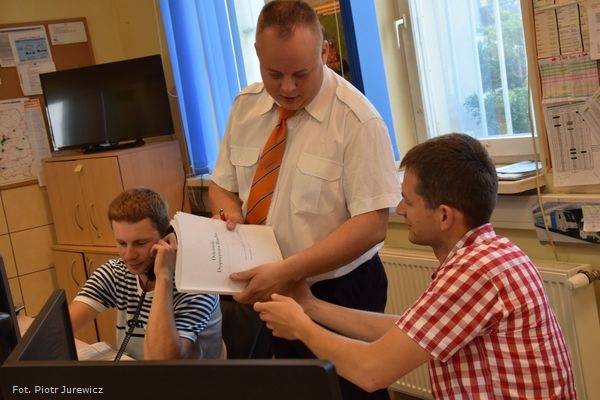
Vigilant every day, they track the current situation on the railway network. They work all year round, 24 hours a day. In emergencies, they react immediately to ensure passengers reach their destination safely. What do the daily duties of PKP Intercity railway traffic dispatchers look like?
Minutes are worth their weight in gold
A dispatcher’s work involves monitoring train traffic around the clock so that in emergency situations, such as damage to the overhead line or a train being immobilized by fallen trees, disruptions for travelers are minimized as quickly as possible. In such cases, dispatch staff, in cooperation with other carriers, the infrastructure manager, or the Customer Support Center, ensure passengers reach their destination safely. Upon receiving notification of an incident, the dispatcher takes immediate action. First, they establish all necessary information, such as the train’s location, the number of people on board, or the distance to the nearest station. This makes it possible to provide passengers with a transfer or organize replacement transport. At the same time, the dispatcher remains in constant contact with the train manager, who informs travelers about the current situation.
– Every minute is worth its weight in gold – notes Jarosław Gacki, Head of the Main Dispatch Department at PKP Intercity. – When something happens on the tracks, the dispatcher must make an immediate and accurate decision. This requires a great deal of imagination. We must realize that our decisions affect the passenger’s further journey. Proper communication between the infrastructure manager and other carriers is the key to success.
Difficult decisions
Several thousand trains run on Polish railway lines every day, of which about 350 are PKP Intercity trains. An incident occurring in a given region can affect train traffic across the entire railway network in Poland. For example, if disruptions occur on the Central Railway Line, they can affect travelers from both the south and the north of the country. Dispatchers ensure that the consequences of such cases are minimized each time. They decide how to ensure passengers can continue their journey and also enable other trains to run.
– It is not always possible to meet the expectations of all passengers. There are cases where we hold a train’s departure so that a group of people can make their connection and reach home the same day – notes Jarosław Gacki.
Dispatch staff also intervene in unusual situations. As Jarosław Gacki recalls, a few years ago, as a result of spring downpours, local flooding occurred in some regions of the country. In the town of Głowno, near Łódź, it also affected a section of the railway tracks. Passengers could not get off the train immobilized by the water. At that time, dispatchers, in cooperation with the Fire Brigade and the Provincial Crisis Management Team, decided to evacuate the travelers to the nearest school using pontoons. The passengers received blankets, as well as warm drinks and refreshments, and after the incident, they continued their journey by bus.
The light never goes out there
The basic tool for a dispatcher is a map showing the movement of all trains in Poland. In the event of any alarming situations, the color in a given place on the map changes to red, which is a signal to take action. PKP Intercity dispatch centers are located in Warsaw, Poznań, Gdynia, and Kraków. About 60 people work there, monitoring all incidents on railway lines in the country 24 hours a day, every day.
– The light never goes out here – emphasizes Jarosław Gacki.
The Main Dispatch Center operates in the capital, coordinating the activities of the other branches. Dispatchers work closely with the Customer Support Center, and the activities of both units complement each other.
How to become a dispatcher?
In the dispatcher profession, the most important things are the ability to work under time pressure, imagination, and experience, which help in solving non-standard situations.
– It is hard work requiring immense focus, yet there is no high staff turnover. To work in this profession, one must possess extensive knowledge of railway lines. Dispatchers are recruited from people who have worked in various positions on the railway. New people initially observe the work of their more experienced colleagues, and then, gradually, they begin to make independent decisions – emphasizes Jarosław Gacki.