








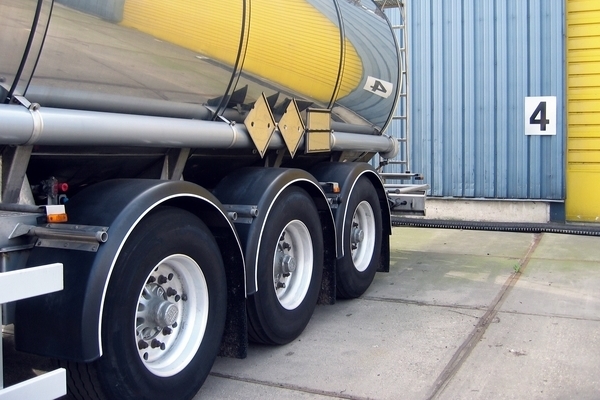
The issue of ecological hazards generated by the transport sector remains current and requires continuous research, both in theory and in practice. The experience of recent years indicates that one of the fundamental areas of transport activity posing risks to the surroundings are accidents, which are the result of the imperfections of civilizational progress.
As a consequence of these events, we encounter various types of unfortunate failures, collisions, accidents, or disasters. Among these events, hazards related to the transport of harmful substances and materials play an important role.
As a result of the aforementioned events, often linked to the adverse impact of natural forces, a whole range of various chemical substances are released into the environment every year, which can pose both primary hazards and, increasingly, a very dangerous spectrum of secondary hazards. As a result of these accidents, there may be a necessity for long-term rescue operations.
The transport of dangerous goods is a multifaceted, complex process that necessitates specialized knowledge. Specific responsibilities are assigned to every party involved in the transport of hazardous materials. The transport in question can pose a danger to road users, the surroundings, and the natural environment alike. Hence, a very important issue is the analysis of the level of road safety and the assessment of actions taken aimed at eliminating existing hazards, which was the main objective of this article. Based on secondary statistical data and selected examples from economic reality, the most important issues related to road safety and the risk of transporting dangerous goods were discussed. Furthermore, the key causes of accidents involving hazardous materials were analyzed.
Safety of transporting hazardous materials
The transport of dangerous goods is a special type of transport that requires a large resource of knowledge in this area. Proper organization of transport based on standards and regulations in the field of safety ensures the removal or reduction of hazards by minimizing the possibility of an accident or the scale of potential damage. However, these activities should not entail a ban on the transport of hazardous materials. An exception may only be the transport of such goods that cause specific, difficult-to-remove hazards. The term hazard should be understood as an event caused by random (natural) or non-random (intentional) causes, which exerts a negative impact on the functioning of a given system or causes adverse changes in its internal or external environment. Accumulated and unresolved hazards can lead to a crisis situation both in the system under consideration and in a specific system environment.
The article contains 19,840 characters.
Source: Logistyka Magazine