









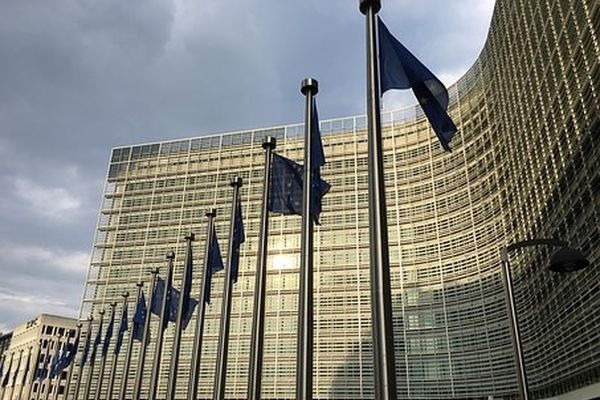
On May 31, 2017, the European Commission unveiled long-awaited changes for the transport sector. The legislative proposals in the form of the so-called Mobility Package will particularly affect the owners of transport companies in Poland and all of Eastern Europe. OCRK experts explain how international transport within the European Union will change.
Information about the planned changes in road transport regulations was communicated by the European Commission as early as March of this year. Even before the details of the Mobility Package were revealed, the document divided EU members into supporters and opponents of tightening the law. France, along with nine other countries, accused Eastern European states of practicing social dumping, which in their opinion leads to unfair competition through the implementation of lower-price policies. In response to these allegations, on May 11, the Prime Ministers of the Visegrad Group countries decided to issue a joint statement. In the document, the heads of government draw attention to the essential role of the free movement of goods as one of the main pillars of the European Union. The provisions on the freedom to provide services contained in the Treaties were also cited.
– Poland is one of the powers when it comes to transport within the European Union. Therefore, it is not surprising that countries such as France, Germany, or Austria are trying by all means to stop the competition in the form of Polish carriers. The “Old EU” states have introduced a number of regulations under which every driver passing through their territory must comply with rules such as minimum wage rates or keeping documentation related to posting – comments Kamil Wolański, an expert at the National Center for Driver Settlement (OCRK).
The proposals for changes announced by the European Commission on May 31 affect key areas from the perspective of international transport.
1) Rules for subjecting drivers to the Posting of Workers Directive
This refers to the Posting of Workers Directive (96/71/EC), which assumes the application of exactly the same employment conditions for drivers within a given member state. In practice, this means that domestic and posted workers would have to receive the same remuneration and would also have the right to equal treatment resulting from, among other things, collective agreements.
– At the stage of discussing the draft regulation, there was a dispute over the number of days per month that a driver must work in a given country to be subject to the Posting Directive regulations. There was talk of 3, 5, 7, 9, and even 15 days. The EC adopted the most unfavorable version from the point of view of a Polish carrier, i.e., just 3 days of a driver’s work in a month or one cabotage operation is enough for their remuneration to be based on the regulations of the host country. However, we are waiting for clarification on how to define the aforementioned “day” – comments Kamil Wolański.
2) Facilitating posting and increasing the number of minimum wage checks
The EC plans to unify the posting notification system across the EU by introducing an appropriate electronic platform, abolish the obligation to have a representative in every country, and allow wage documentation to be stored only in electronic form. On the other hand, it intends to introduce the requirement for drivers to register the moment of crossing borders using a tachograph.
– Introducing a uniform system for reporting posting will certainly simplify life for Polish transport entrepreneurs. In current realities, there were situations where a driver going, for example, to Spain, should have been reported separately in 4 countries, to 4 different systems, in 4 different ways. Eliminating the need to have a representative will certainly reduce the costs incurred by employers in connection with posting a worker to some extent, as will the electronic circulation of documentation. However, minimum wage control will certainly be more rigorous and effective due to the new obligation regarding the registration of entries and exits from European countries – notes Kamil Wolański.
3) Simplification of cabotage rules, i.e., domestic transport performed by foreign carriers
In light of current regulations, cabotage (i.e., transport of cargo within a country other than the one where the vehicle is registered) can take place a maximum of three times a week, counting from the day of the last unloading. According to the new proposal, this limitation is to be abolished.
– Controlling the number of unloadings is quite difficult for road services, so simplifying the rules by removing the limit on operations at the cost of shortening the total time for performing cabotage to 5 days is a good solution that will facilitate supervision by the services. According to the EC, the new rules will also contribute to reducing the number of so-called empty runs, which, according to Commission estimates, amounted to as much as 23% of all operations in 2015 – explains the OCRK expert.
4) Weekly rest periods for drivers
One of the most important points of the Mobility Package focuses on the recently loud issue of driver rest periods. The European Commission has proposed a more detailed definition of the conditions for drivers taking rest in cabins. Art. 8 para. 8 of Regulation (EC) 561/2006 states: “If a driver chooses to do so, daily rest periods and reduced weekly rest periods away from base may be taken in the vehicle, provided that it has suitable sleeping facilities for each driver and the vehicle is stationary.”
– France, Belgium, and since May 25, also Germany, have introduced a ban on taking regular rest periods (>45h) punishable by fines. The proposal introduces the possibility for a driver to take two reduced weekly rest periods (<45h) in a row, within a period of 4 weeks, while maintaining the applicable compensation rules. This will certainly make planning drivers' working time more flexible. On the other hand, the EC wants to introduce a pan-European ban on taking regular weekly rest periods in the vehicle cabin under threat of severe penalties – adds Wolański.
5) Fighting “letter-box” companies
So-called letter-box companies are those that have only a correspondence address in the country of registration, while the actual operational center is located in another country.
– The European Commission will require that a foreign company that, for example, operates in Poland and theoretically employs cheaper Polish workers, actually conducts business in our country – explains Kamil Wolański, an OCRK expert. To achieve this, the European Commission plans to introduce clear criteria to “crack down” on this phenomenon, including by strengthening cooperation between control services.
6) Road tolls in the EU
The Commission has also proposed unifying the platform for collecting road usage fees. The new solution is to be entirely electronic and is to cover all European countries. This is also to be combined with new solutions promoting low-emission vehicles, which, depending on their environmental friendliness, will benefit from preferential road usage fee rates.
– Ultimately, such a solution is intended to eliminate various vignettes and other stickers on car windshields, which will contribute to fair and uniform pricing for travel. It will also simplify control carried out by services on the road – says Wolański.
7) Regulations on light transport, with a GVW <3.5 tons
At the moment, regulations regarding holding a transport license or the requirement to record working time apply to companies operating with heavy goods vehicles over 3.5 tons. In practice, the working time of so-called light transport, including vans, is not regulated in any way, which is problematic for the rest of the industry.
– Drivers in light transport companies, i.e., with a GVW below 3.5 tons, are not covered by regulations; as a result, the vehicles are not only overloaded, but it happens that drivers drive for a dozen or so hours a day without rest. This creates a real danger on the road, not only for the driver and passengers but also for other road users. However, the EC is currently only considering regulations regarding the management of such companies in the context of granting licenses – comments Kamil Wolański.
The changes announced by the European Commission do not have legal force, but they indicate a clear direction for further discussions between the European Parliament and the Council of the European Union. As OCRK experts point out, the changes presented in the Mobility Package will be implemented gradually, even over the next few years.
source: National Center for Driver Settlement (OCRK)