









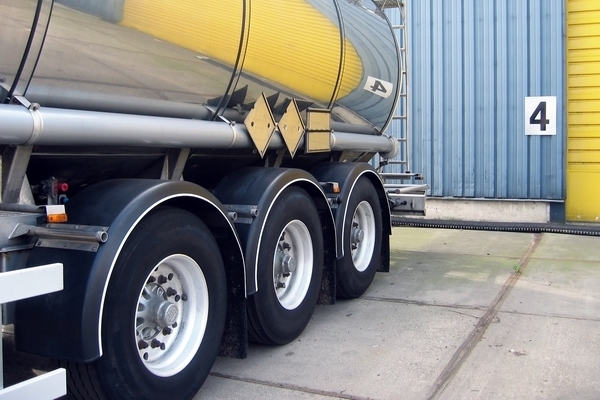
Every day, explosive materials and objects, flammable, toxic, infectious, corrosive, or radioactive substances are transported by various means of transport over distances of hundreds and thousands of kilometers – not only on the outskirts of cities but also in their centers. The transport of these goods requires not only possessing and applying specialized knowledge but also specialized vehicles.
Among the factors increasing the risk associated with the transport of dangerous goods, the most significant are: the volume and intensity of transport (especially in road and rail transport), the technical condition of vehicles and tanks used for transport, residual or non-existent monitoring of shipments, selective compliance or complete non-compliance with international regulations regarding the transport of dangerous substances (primarily RID, ADR, IMDG Code, and IATA-DGR), the lack of dedicated safe transport routes (a small number of bypasses in large agglomerations), and finally, the difficulty in specifying the location of a potential accident. In recent years, the threat of using shipments with dangerous materials for terrorist attacks has also increased.
The transport of dangerous goods accounts for approximately 10-15% of all transport in Poland. In 2010, road transport of dangerous goods in Poland amounted to 5.9 billion tonne-kilometers (6th place in Europe – after Germany, Spain, Italy, France, and the United Kingdom). Between 2005 and 2010, road transport of dangerous goods in the European Union amounted to approximately 80 billion tonne-kilometers annually. The share of dangerous goods transport in total road transport in the EU between 2005 and 2010 was relatively stable, remaining between 4.3% (2007) and 4.6% (2009).
In rail transport, more than 70% of dangerous cargo consisted of flammable liquid materials (crude oil and petroleum products, e.g., gasoline, diesel fuel). According to the classification of dangerous materials, apart from flammable liquid materials, the largest share in transport was held by gases (11.1% of mass), corrosive materials (6.9%), and flammable solid materials (4.4%). Dangerous goods had a relatively high share of over 9.2% in total rail cargo transport in 2011 (in transport performance – 13.7%). Despite the increase in the transport of these cargoes recorded in 2011, there has been a downward trend in their share in rail transport since 2009, mainly in terms of transport performance.
The article contains 32,820 characters.
Source: Logistyka Magazine