









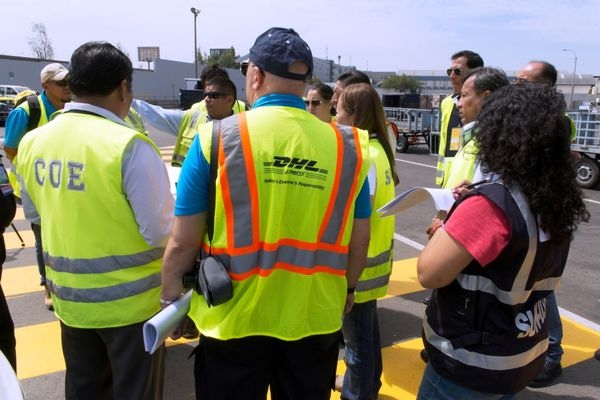
Four-day GARD training and a customized action plan developed for emergency situations at Tribhuvan and Nepalgunj airports.
Within 48 hours of the earthquake in Nepal (April 2015), humanitarian aid and rescue teams from around the world were arriving en masse at the country’s main airport. A week after the disaster, due to the influx of aid planes, the runway was damaged and could no longer accommodate large aircraft.
Airports play a critical role in channeling humanitarian aid and rescue teams in the short time following a disaster. In addition to having the necessary infrastructure to allow for the seamless delivery of aid to affected communities, the team providing assistance on the ground requires training. The 2015 earthquakes showed that an appropriate level of infrastructure and effective logistics operations not only save lives but also reduce economic costs. With this experience in mind, Nepalese airport management authorities, representatives of the Ministry of Home Affairs, the Nepalese Armed Forces, and other humanitarian aid organizations have collaborated to strengthen emergency preparedness structures at two of Nepal’s most strategic airports: Tribhuvan International Airport in Kathmandu and Nepalgunj Airport.
Get Airports Ready for Disaster (GARD) Workshops
At the beginning of February this year, the Deutsche Post DHL Group and the United Nations Development Programme (UNDP) conducted a four-day Get Airports Ready for Disaster (GARD) workshop, with the participation of over 30 senior representatives from government agencies and airports. During the workshops, an action plan was developed to prepare Nepal’s airports for future disasters.
– The 2015 earthquake made us realize how important a role airports play in Nepal’s emergency response network – said Valerie Julliand, UNDP Resident Coordinator. – We cannot wait for the next natural disaster to arrive to implement resilient and effective contingency plans that allow for managing the influx of aid for people in need. The GARD workshops are a key stage in the UNDP’s work to support the government of Nepal in creating a disaster-resilient country and preparing airports for immediate response in emergency situations.
Nepal, located in the mountains and landlocked, is heavily dependent on air transport for aid supplies in disaster situations. As part of the GARD workshops, DHL Group aviation experts and UNDP leaders shared best practices in disaster logistics management with participants and worked with them to develop customized emergency response plans for both airports. The workshops will also help increase awareness of disaster risk reduction and identify investment priorities in national infrastructure, which can further increase the resilience of aid supply chains during disasters.
Minimizing logistics bottlenecks
– A clear and flexible action plan helps airport operators minimize logistics bottlenecks and better manage the sudden influx of aid and supplies of food, water, and medical supplies, as well as NGO personnel arriving in the country – said Chris Weeks, Director of Humanitarian Affairs at DHL.
– The 2015 earthquakes showed that effectively directing aid from airports to communities affected by the disaster requires appropriate infrastructure capabilities and fast administrative procedures. In addition to assessing airport facilities and increasing staff knowledge, the workshops will result in a series of follow-up actions, including an action plan that we will test in a series of simulation exercises – said Sudhir Kumar Chaudhary, Director of Airport Operations at Tribhuvan International Airport.
GARD Program
In 2009, the Deutsche Post DHL Group, in cooperation with the United Nations Development Programme (UNDP), developed the GARD program aimed at preparing airports in disaster-prone areas to handle the rapid influx of humanitarian aid following a catastrophe. This program also allows various organizations and aid agencies to better understand the processes that occur at airports after a natural disaster. To date, the GARD program has been conducted at approximately 40 airports in Armenia, Bangladesh, the Dominican Republic, El Salvador, India, Indonesia, Jordan, Lebanon, Macedonia, Nepal, Panama, Peru, the Philippines, the Seychelles, Turkey, and Sri Lanka. GARD trainers and training materials are provided free of charge by the DP DHL Group, and the UNDP implements the project and facilitates coordination with state authorities. The organization of GARD training workshops and logistics costs are fully covered by the UNDP with the participation of the German government.
GARD is an integral part of the DHL GoHelp program, through which the Group combines its preparedness and emergency management activities. In the event of a disaster, Disaster Response Teams (DRT) provide emergency assistance and ensure that humanitarian aid can be received in a coordinated manner and transferred to the appropriate aid organizations. The Disaster Response Teams were established in cooperation with the UN Office for the Coordination of Humanitarian Affairs (UNOCHA). They include a global network of over 400 volunteers – specially trained employees of the DHL Group.