









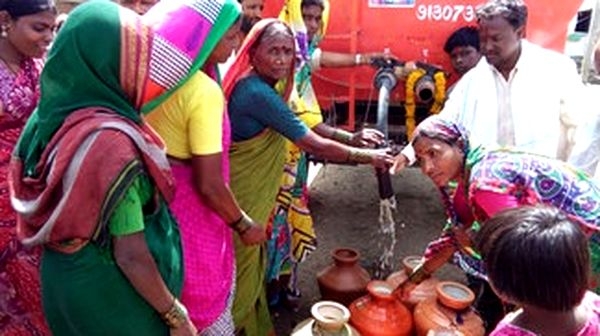
Facing one of the worst droughts in decades in central India, international logistics operator Dachser, together with the organization Terre des Hommes, is delivering water to ten villages in the Latur district of the Indian state of Maharashtra. These efforts are being carried out with the aim of long-term improvement in the living conditions of children and young people in the country.
Dachser has joined an initiative to improve water infrastructure and ensure a constant supply of drinking water for the residents of the Latur district as part of a partnership with the Dutch organization Terre des Hommes that has been ongoing for over 10 years. In recent years, monsoon rainfall in India has dropped drastically, causing groundwater levels to fall significantly. The situation is so serious that if appropriate steps are not taken, the water deficit on the Indian subcontinent could reach as much as 50% by 2030.
– In addition to immediate emergency aid, such as delivering drinking water in tankers, the goal of our new project in the state of Maharashtra is to help people in such a way that, in the long term, they are able to help themselves. This is the essence of our cooperation with Terre des Hommes in India, Nepal, Namibia, and Brazil – explains Bernhard Simon, CEO of Dachser. – Our activities are intertwined: we want to provide access to safe drinking water, create ways to store it, provide the local community with healthcare and educational opportunities, and spread knowledge about water-saving crop cultivation methods. We also want to provide seeds to families in particular need so that their members can be properly nourished.
– Our goal is to ensure the long-term survival of 1,887 families affected by the drought in ten villages in the Latur district of Maharashtra – says Ingrid Mendonca, Regional Coordinator for South Asia at Terre des Hommes.
Households covered by the aid will be provided with access to safe drinking water. They already have at their disposal ten tanks for storing precious monsoon water, which they can later use for their daily needs. Furthermore, villagers suffering from dehydration, often severe, will have access to medical examinations and treatment.
The overarching goal of the project is the lasting dissemination of valuable knowledge. Villagers will participate in workshops on civil rights so that in the future they can seek help themselves from the Indian authorities responsible for the population’s situation. At the same time, local partners of Terre des Hommes are working with local farmers to develop alternative water-saving cultivation methods. For children, “sanctuaries” are being created where they can spend their free time – both playing and learning.
– Only those who can take responsibility for their future will have one at all – concludes Bernhard Simon.