









Proposed solution and its significance from the perspective of patient care level
In accordance with the Act on Medical Activity and the Regulation of the Minister of Health on the conditions, manner, and procedure for providing hospital patients with identification marks and the procedure in case of their absence, every medical entity is obliged to encode patient data, and patient identification marks should contain “information allowing for the determination of the patient’s name and date of birth, recorded in a way that prevents identification of the patient by unauthorized persons”.
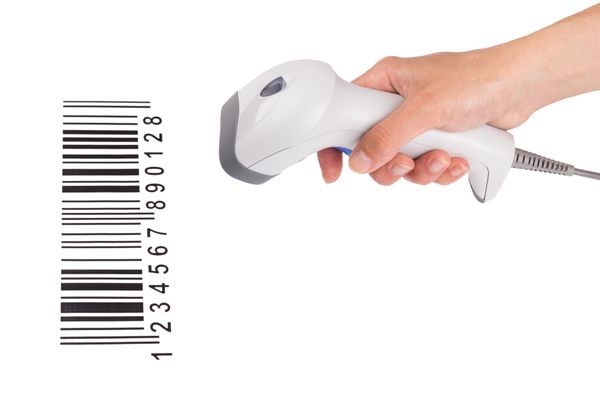
The main reason for introducing such regulations, as indicated in the first part of the article, was the need to provide a mechanism allowing for the protection of patients’ personal data. A barcode wristband on a patient’s wrist complies with the requirement of the aforementioned Act on Medical Activity regarding the encoding of patient data and is frequently used in practice by hospitals in many countries around the world. Studies have shown that approximately 20% of medical errors result from incorrect medication administration. Very often, the cause of these errors is improper patient identification. Every year, up to 100,000 people die in the United States for this reason. Additionally, studies conducted in the United Kingdom regarding the use of nurses’ working time on the ward showed how pressing this problem is, even if seemingly invisible. Each nurse spends an average of one month per year searching for lost equipment, medical supplies, or documents. Every day, about 1/4 of all nurses in a hospital look for a patient’s medical record or laboratory data. Most of them are convinced that the application of the popular barcode technology from supermarkets would significantly help eliminate these problems. Almost half of them were also convinced that a bracelet with a patient code on their wrist would significantly help in their identification and allow for a reduction in the number of errors by more than 50%. The recommended solution for hospitals is to use a barcode wristband for patient identification, which displays a non-significant patient number. This means that there is no additional information in the barcode itself, and this number serves as an access key to the hospital’s database, where all data about the patient is stored, such as, among others, their name, date of birth, and other information that may change dynamically (for example, the type of medication taken). Data presented in this way is impossible to read by unauthorized persons and is available only to authorized personnel equipped with appropriate equipment enabling access to the database. A barcode wristband is a carrier of specific information, constituting only a fragment of the solution for the protection of personal data.
A key element, mentioned earlier, is the information presented in the form of a barcode, i.e., a non-significant number referring to information stored in the hospital’s ICT system. Due to the need for unique and unambiguous identification of the patient – on the scale of medical entities and the country – and to ensure effective and safe therapy, it would be reasonable for hospitals to use global GS1 identifiers. Within the global GS1 system, there is a so-called Global Service Relation Number (GSRN) used for patient marking. It is an 18-digit number that can be presented in the form of standard barcodes, for example, the GS1-128 linear code or the GS1 DataMatrix two-dimensional code.
The article contains 15880 characters.
Source: Logistyka Magazine
Using standard barcodes for patient identification – legal framework