









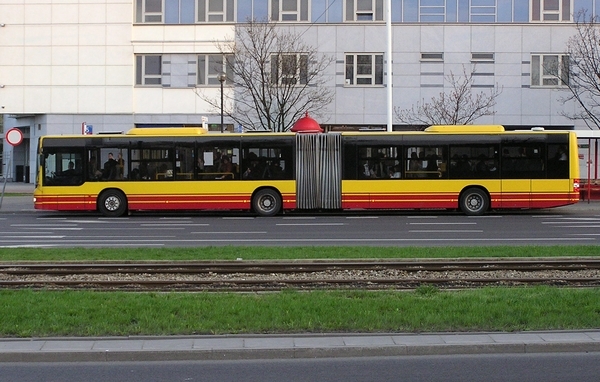
The entities of transport policy in cities are bodies and institutions whose task is to program the goals of transport policy and its implementation. The structure of the influence of transport policy entities on the transport system is hierarchical, as it is currently created at the international, national, regional, and local levels. The local dimension of transport policy is therefore dependent on entities operating at a higher level of this hierarchy.
European Union Transport Policy
The European Union’s sustainable transport policy aims to ensure that transport systems meet the economic, social, and environmental needs of society. Its goals therefore remain constant over time, although its general context is evolving. In particular, the Union’s intention is to increase intervention in terms of assisting cities in implementing sustainable transport policy. The result of these intentions is the creation of Green Papers, which contain proposals for improving or expanding the scope of existing European Union transport directives. These papers are prepared by the Directorates-General of the European Commission or initiated by commissioners. Green Papers take the form of a communication and are published as working documents of the European Commission. Their main purpose is to initiate discussions on transport-related topics. They contain general assumptions and variants for regulating a given problem, as well as a series of questions intended to help in the proper development of new Union legal acts. After the consultation phase, initiated by the publication of a Green Paper, a White Paper is developed, containing an official catalog of proposed solutions. The European Union’s transport policy is officially based on the White Paper entitled “Roadmap to a Single European Transport Area – Towards a competitive and resource efficient transport system” from 2011 and on the documents and decisions taken on its basis.
Polish Transport Policy
At the beginning of the 1990s, the state withdrew from overseeing transport in cities, including local public transport. Local governments raised ticket prices and limited financial resources for fleet replacement and infrastructure maintenance. The development of motorization, the increase in passenger car sales, and consequently the increasing road congestion in cities caused a decline in the attractiveness of public transport and a deterioration in its regularity. The current situation of Polish cities is diverse in terms of the level of motorization development, traffic conditions, the state of technical infrastructure, the principles of organizing public transport services, and the degree of preparation and implementation of transport development policies and programs.
The article contains 34,150 characters.
Source: Logistyka Magazine