








Arousing the interest of a modern consumer in any product requires a great deal of knowledge from a marketer. The dynamic development of technology and the massive shift in social behavior, attitudes, and consumer expectations have meant that promotional methods used even 10–15 years ago have practically ceased to function.
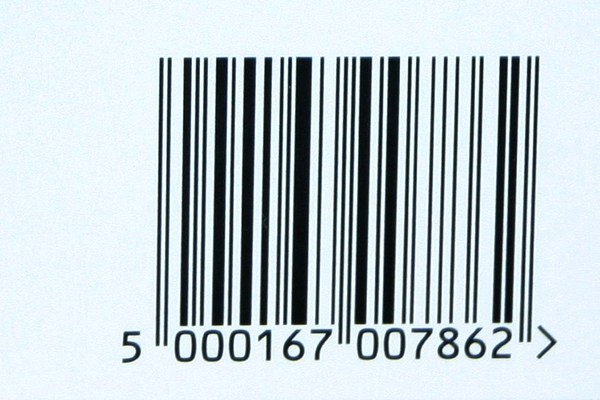
Marketing, image-building, and PR departments, however, are not remaining idle. New forms are developing rapidly: content marketing, performance marketing, affiliate marketing, network marketing, event marketing, shopper marketing, and others. By using various communication channels, their task is to surprise and reach the EMOTIONS of the recipient. Creative agencies are competing with ideas on how to focus the consumer’s attention and encourage them to interact with a product or idea. An old-new element that can be used for this is the barcode. Let’s take a closer look at it.
Once upon a time in America
It all started even before World War II, and it really developed right after it. The 1950s in North America was a period of strong development in trade, including large-format retail. With the growing number of goods placed on store shelves, marking each of them with a price began to cause significant trouble. It slowed down stocking and customer checkout, and almost ruled out efficient inventory management. These were the reasons why, in 1948, an entrepreneur approached the Drexel Institute of Technology in Philadelphia with a request for help in developing a system for automatic inventory tracking and product checkout. Two scientists worked on the solution: Bob Silver and Norman Joseph Woodland. It was the latter who invented the barcode. Sometimes it is a long road from an idea to a solution, because here, developing a finished solution—that is, the code and the device to read it—took a quarter of a century. It was not until June 26, 1974, that the first product marked with a standardized barcode was scanned. Since then, millions of manufacturers and retailers have used black and white bars every day to serve customers efficiently. Over the years, the barcode has become the most common standard in trade and logistics. Organizations from the USA, Canada, and Europe responsible for the barcode joined forces and in 2005 created the global organization GS1, which was joined by countries from other continents. They thus led to the creation of a truly global language of business. Today, GS1 covers over 120 countries around the world and assigns codes to over 2 million companies. Stores, both large and small, use them very intensively, scanning over 5 billion barcodes every day.
The article contains 9760 characters.
Source: Logistyka Magazine