









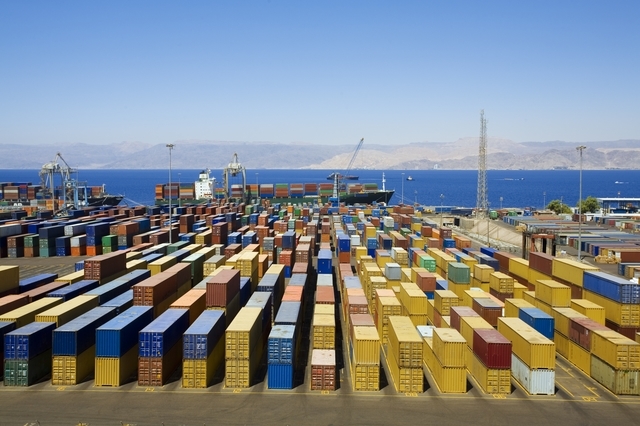
Due to the increase in cargo turnover and the recent intensification of road congestion, it has become necessary to introduce spatial and technological solutions that, on one hand, allow for handling increased cargo volumes, and on the other, minimize the risk of delays in container deliveries to terminals.
Thanks to very good land infrastructure, physical distance in the hinterland is no longer the primary criterion for selecting the location of elements of the port terminal hinterland logistics system – currently, the reach of the hinterland is defined more by the line of equal costs or access protection. As a result of the deepening of terminal hinterlands, their catchment areas increasingly overlap, leading to constant competition between ports. Port authorities and terminal operators are therefore sometimes forced to make risky investment decisions in areas located outside their main area of operation, without any guarantee of shipping companies’ loyalty to remain in a given port. Hence, it is so important to analyze the widest possible spectrum of development scenarios for port container terminals currently being implemented worldwide.
The article lists, characterizes, and attempts to classify spatial and technological solutions leading to an increase in terminal throughput, focusing on those that contribute to increasing the fluidity of container deliveries to port terminals.
Development scenarios for port container terminals
As a cause of congestion in port container terminals, Roso et al. cite primarily the long storage period and the resulting low container turnover. Usually, container storage in port terminals takes place without additional fees if it lasts about 3-7 days. With longer storage times, resulting, for example, from a lack of timeliness in container deliveries, higher rates are charged. As a consequence of low turnover, the terminal may become overcrowded, and its transshipment capacity may temporarily decrease significantly. Based on observations of container terminal operations, it can be estimated that once 75% of storage capacity is exceeded, terminal operations can slow down significantly due to the need to perform a much larger number of operations.
The article contains 27,790 characters.
Source: Logistyka Magazine