








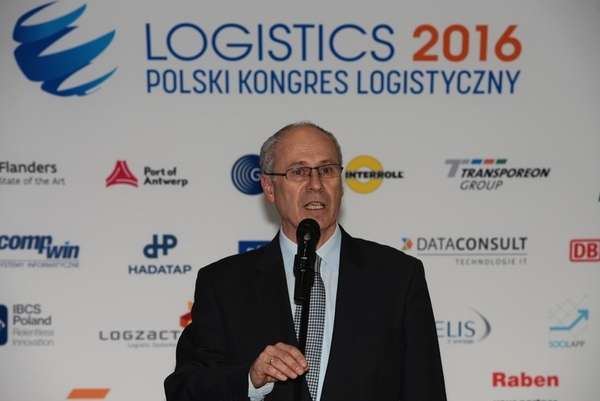
Yesterday marked the start of the 13th edition of the Polish Logistics Congress LOGISTICS 2016, the largest logistics industry event in this part of Europe. Over 800 participants, speakers, and exhibitors from all over the world have arrived in Poznań to take part in lectures, workshops, business meetings, and an exhibition of logistics products and services.
A few minutes after 10:00 AM, the Congress was officially opened. The plenary session was inaugurated by a speech from Mariusz Jedliński, Chairman of the Polish Logistics Society, who emphasized how important and relevant the Congress’s main theme is.
– Logistics in the digital world fits into the latest trends driving modern logistics – says M. Jedliński. – Increasingly common mobile devices allow us to look at the world through a local window, collect data, and control selected elements of the supply chain. But one day, the world might look at us through that window. Using modern technologies, we must ask ourselves if we are properly prepared and secured for it.
The 13th edition of the Polish Logistics Congress LOGISTICS 2016 has also gained a European dimension, as it is being organized jointly with the European Logistics Congress EUROLOG 2016. The high level and wide reach of the Congresses have been recognized in this way for the second time by the European Logistics Association.
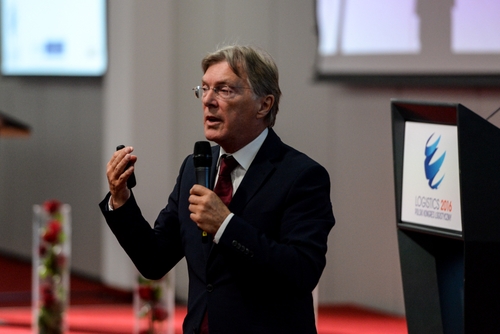 – This is my fifth time in Poznań, and every time I see significant progress in the organization of this event – says Jos Marinus, President of ELA. – I am also very proud of the fact that this year the European Logistics Association has joined in the organization of the Congress, which has resulted in expanding the event program with the ELA Research Day conference, dedicated to the effective use of Big Data and supply chain structure management.
At the previous Congress, held two years ago, speakers addressed the topic of communication in supply chains. Participants exchanged experiences related to forms of communication, ways to increase data transmission efficiency, and the use of communication platforms in enterprises. This year’s Congress theme is a natural extension of that debate: communication generates huge amounts of data that are collected in databases, processed, and analyzed to then become the basis for drawing conclusions about modifying logistics processes, production levels, and ways of reaching the customer.
– We can now collect data on a massive scale, reading readings from sensors located on trucks, pallets, mobile phones, or fitness bands – says J. Marinus. – And you don’t have to be an analyst to understand the processed data we receive, even if we don’t think about how it is created. The future of our world belongs to sensors and the data we read from them.
And this data can already be extremely detailed and useful. Thanks to it, one can manage inventory in an intelligent way, predict travel time with an accuracy of a few minutes, manage equipment maintenance, and monitor all traffic within the studied area. And this is just the beginning of the changes that await us in the coming years.
Hans-Christian Pfohl from the Technische Universität Darmstadt spoke in a similar tone:
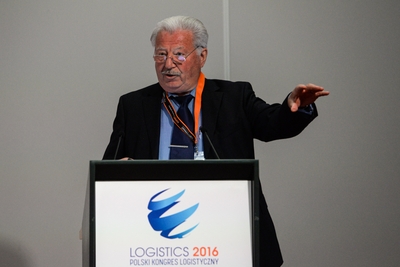 – We are witnessing the fourth industrial revolution, the main features of which are efficient IT and communication systems, breakthrough technological innovations, and the growing share of the model of selling goods and services through various types of platforms – explains H.-Ch. Pfohl. – Technological innovations generate rapid changes in the business environment. Completely new markets appear instantly, while old ones collapse at an alarming rate. The way companies conduct their business and cooperate with each other in the supply chain is changing radically.
The dynamically changing situation in global markets requires continuous work, constant adaptation to changing realities, and forward-thinking, providing consumers with products and services that exceed their expectations. Is it therefore still possible to forecast production based on historical data collected from sensors? Can we still expect that thanks to the growing amounts of data received, our ability to formulate reliable forecasts will increase? Rami Goldratt, CEO of the Goldratt Group, claims not. Moreover, he even puts forward a controversial postulate that companies should abandon the dependence of their actions on forecasting.
– Modern business oscillates between two extremes, which we can simplify as “too little” and “too much”. Somewhere between them lies the space in which a company that wants to succeed should move. But forecasting does not help to find and define this intermediate point between the extremes – explains R. Goldratt.
Consumers are increasingly sensitive to receiving a tailored product that will meet their individual expectations. Consequently, companies must offer an increasingly wide range of diverse products, and the greater the choice, the higher the customer expectations. At the same time, the consumer’s tolerance time for waiting for a product is drastically shortening. Companies are forced to operate on larger inventories and deliver orders faster, which in turn translates into the customer getting used to receiving the product immediately, without waiting for delivery. Increasingly, the race for the customer is won by those companies that have the most distributed warehouses, thanks to which they can offer the fastest delivery to the individual recipient. In addition to the two dynamics above, there is a third one, which speaks of the shortening product life cycle.
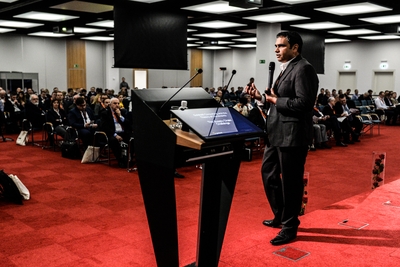 – There are industries, such as electronics or fashion, where the product life cycle has shortened over the last decade from three years to three months – explains R. Goldratt. – The consumer expects that a product a few months old will be replaced in the offer by a newer model, or will be offered at a very large price promotion. A few-month-old TV or smartphone becomes obsolete because, at the same time, competitive models with better parameters, more interesting functionality, or a more attractive price have appeared on the market.
Faced with such market dynamics, companies are starting to introduce new product models to the market in a time that would have seemed absurdly short just a few years ago. Operating on such short time intervals, on constantly changing customer expectations, and introducing new products all the time, it becomes impossible to use the data held to forecast future sales. The only way out of this difficult situation is to abandon forecasts based on historical data and reduce the reaction time to how the market behaves.
Knowledge of how the market works, what its strengths and weaknesses are, and how the entire infrastructure associated with it functions is the foundation upon which a well-functioning business can be built. Logistics is one of the basic sectors of the economy, but it should also be perceived as an element of a company’s development strategy. Bearing in mind such a formulated assumption, it is worth getting acquainted with current research on the state of logistics in Poland, which covers both the condition of logistics enterprises and a diagnosis of the quality and efficiency of logistics processes. Grzegorz Szyszka, Director of the Institute of Logistics and Warehousing, spoke about the state of the logistics industry in our country.
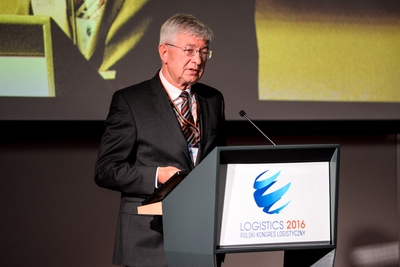 – Logistics has slowed its momentum; growth in the last two years is not significant, which, however, should not be surprising – says G. Szyszka. – The economy has stabilized, which translated into GDP growth at the level of 3.5% – almost twice as high as the European average.
Individual logistics sectors are not developing evenly – for example, the development of linear infrastructure has slowed down and amounted to only 400 km of new roads. Investment expenditures on roads have fallen. The road freight transport market has also slowed down. At the same time, the number of warehouses has increased, and the area of warehouse space has exceeded 10 million sq. m. The vacancy rate has fallen (to 6%), which bodes well for the development of point infrastructure.
During his speech, Grzegorz Szyszka relied on data collected in the publication “Logistics in Poland. Report 2015”, published by the Institute of Logistics and Warehousing as part of the Biblioteka Logistyka series.
The Polish Logistics Congress Logistics 2016 is not just speeches and presentations. It is also a place for exchanging experiences and cooperation between business partners.
– The Polish Logistics Congress LOGISTICS 2016 is an event that provides a platform for knowledge exchange, presentation of trends, current concepts, and the latest projects, covering all areas related to logistics. “LOGISTICS IN THE DIGITAL WORLD” as the slogan of this year’s edition is intended to draw attention to the increasing importance that widespread digitalization has for logistics – says Ilona Kużaj-Aydar, PR & Event Manager at the Institute of Logistics and Warehousing, coordinator of the Polish Logistics Congress LOGISTICS 2016. – This creates new challenges for logistics, but also conditions better implementation of logistics processes thanks to new IT and communication tools.
The rich formula of the congress, including speeches by experts and market leaders, thematic sessions and debates, workshops, company visits, and the “Logistics Market” exhibition, makes the Logistics congress an event that every participant from a manufacturing company, distribution company, service provider, or science representative simply must attend.
A detailed program of the Congress and additional information are available on the website www.logistics.pl.
-> READ THE SECOND PART OF THE REPORT <-