









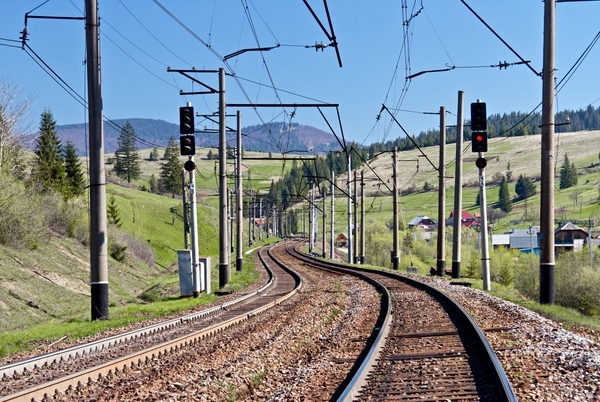
Logistics operator DACHSER, much like in centuries past, is effectively utilizing land routes to transport its customers’ goods between Europe and China. The nearly 11,000 km land route, which constitutes the new Silk Road, is currently being traversed by rail as an alternative to air and sea transport. Małaszewicze serves as the Polish point on the Silk Road.
One of the companies utilizing this route, also present in Poland, is Wilo – a globally operating German manufacturer of pumps and pump systems. Taking into account the requirements of production processes, and on the advice of Dachser, Wilo decided to accelerate its sea shipments from China to Europe by using rail. The operator regularly transports its customers’ less-than-container-load (LCL) shipments along the route of the new Silk Road. As part of its comprehensive service, Dachser collects parts from the Wilo factory in China, ensures their land transport through Kazakhstan, Russia, Belarus, and the Polish branch in Małaszewicze to the final rail terminal in Hamburg. There, it handles customs procedures for the client and then delivers the parts to the Wilo factory in Dortmund. All these operations take 17 days.
The rail route between China and Europe along the new Silk Road is currently considered safe and predictable.
– Trains are generally on time, and status reports are prepared at least once a day, allowing for GPS tracking of goods – comments Helmut Lustinetz, head of Global Partner Management at DACHSER Air & Sea Logistics.
In terms of volume, rail transport is a niche compared to sea freight. However, it is of great importance when delivery time is a factor (14-16 days compared to 38-45 days for sea transport), while the shipment is not urgent enough to justify the cost of air transport (which allows for a time of 3-6 days). As a result, experts estimate that the use of this rediscovered route will gain importance over the next few years. This will open a new, modern chapter in the history of the Silk Road.