









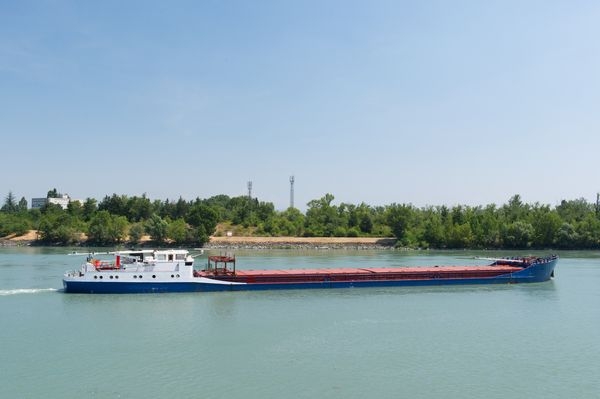
Inland transport has been neglected in Poland for years, which has significantly worsened navigation conditions on rivers. Currently, transport on short and local routes dominates, but steps are being taken to halt the decapitalization process of inland waterways.
Water transport has many advantages that are not fully utilized. Inland navigation has marginal importance in the country’s transport system. Compared to other Polish rivers, the Oder has the greatest significance for inland water transport. The study analyzes the state of navigation infrastructure for inland shipping on the upper Oder, specifically in the area of the Wrocław Water Junction.
The Wrocław Water Junction consists of both elements of historical infrastructure that successfully serve to this day, as well as modernized locks and canals. The junction has been created over many centuries, which is why the existing technical solutions are diverse, and the Wrocław Water Junction is considered one of the most complex and unique junctions in Europe.
Shaping the Wrocław Water Junction
Wrocław was founded in a place where the Oder created a shallow, wide riverbed with numerous islands, which significantly facilitated crossing it. Land and water routes intersected here – the Amber Road (leading from the Adriatic to the Baltic, through the territories of present-day Italy, Austria, the Czech Republic, and Poland), the East-West route from Germany, through the Silesian Lowlands towards the east, and the Oder route leading from the Sudetes to Szczecin and further to the Baltic.
Between the 5th and 10th centuries, a stronghold was founded on Ostrów Tumski, which initiated the creation of the Wrocław Water Junction. The first works transforming the riverbed and the bank were carried out. Earth embankments made of river alluvium were constructed, and the water level in the riverbed was dammed, which had a dual purpose – protection against invaders and security against extreme water rises. Other islands in the Oder riverbed were reinforced in a similar way, which caused their stabilization and provided the basis for the creation of the city.
The first waterway created in Wrocław was the City Water Junction. It was on this route that the first water steps were built in the 14th century – first Piaskowy, then Mieszczański; the current was accelerated and used for energy purposes – to power mills and craft workshops. From the 15th century, subsequent canals were dug, which increased the role of the City Water Junction in shipping. The first Wrocław lock, the Piaskowa lock, was also built here in 1792. The City Water Junction experienced its greatest traffic at the end of the 19th century, when goods were transported along it by barges with a capacity of 450 tons. However, due to increasing transport needs, it was decided to build new waterways bypassing the center of Wrocław. The importance of the City Water Junction declined, and today it serves as a recreational route for passenger transport.
The article contains 77,000 characters.
Source: Logistyka Magazine