









Only 14.7 percent of e-shops have translated their website into at least one foreign language, and only 6 percent of them use foreign domains, according to the latest study by Sociomantic Labs. These data clearly show that domestic e-shops are not prepared for expansion abroad. And that is a pity, because such a step could significantly increase their revenue and profits. How and why is it worth preparing for the internationalization of e-business?
Data from Forrester shows that as many as 84 percent of internet users worldwide shop online using foreign websites. In turn, according to the Chamber of Electronic Economy E-commerce Polska, 45 percent of Poles have already made a purchase in a foreign online store at least once. The value of cross-border trade in Europe will exceed 40 billion euros by 2018. Despite a number of actions by the EU and institutions stimulating the growth of the e-commerce industry, online stores still approach expansion into external markets with great reserve. This is confirmed by the latest research conducted in April 2016 on Polish e-shops by Praktycy.com commissioned by Sociomantic Labs.
Do e-shops not notice foreign customers?
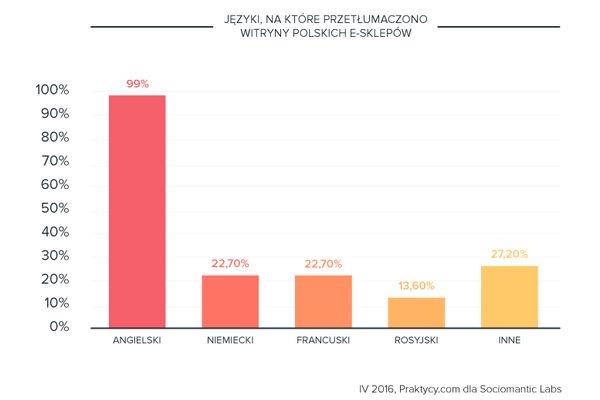
Less than 15 percent of the surveyed Polish online stores have a website translated into at least one foreign language. 54.5 percent of them stopped at only one language version of the site. Almost all companies that performed a translation chose English. Among the 45.5 percent of online stores that decided on more language versions of the site, besides English, they also chose German –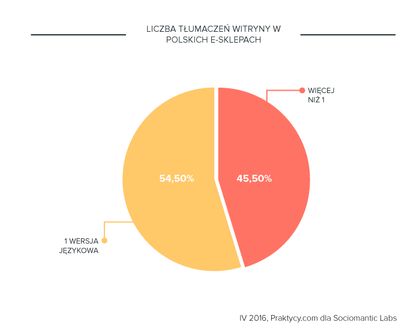 22.7 percent of respondents, French – 22.7 percent, or Russian – 13.6 percent. The lack of openness to foreign expansion is also reflected by the very low percentage of online stores that have their websites on foreign domains – only 6 percent of the surveyed e-businesses use this solution. If an e-shop decides on such a solution, it most willingly chooses the “.eu” domain – 56 percent, and “.com” – 44 percent, according to the Sociomantic Labs study. According to experts, online stores that decide to expand into external markets can compete for a huge group of recipients with high purchasing power.
Expansion into foreign markets in practice
The first step is a thorough analysis – who are the customers, who does the online store want to reach, and which market may turn out to be the best in terms of the products offered? It is not worth deciding to expand, for example, into the German market just because of its close location and efficient logistics. After conducting the analysis, it may turn out that the decision to enter the e-commerce market of one of the southeastern neighbors, e.g., Romania or Hungary, will be a business bullseye for the store. The language barrier is another obstacle blocking foreign expansion. Therefore, the next step taken by online stores is often an attempt to reach compatriots living in other countries. Already at this stage, online stores can record an increase in profits, which will encourage them to further develop e-commerce platforms for customers outside of Poland. As shown by the results of the study conducted on behalf of Sociomantic Labs, only 6.6 percent of online stores allow consumers to make purchase transactions in a currency other than the Polish zloty. The most frequently proposed optional currencies are dollars, euros, and pounds. It happens that such an option is proposed even by companies that have not translated their websites into other language versions. The third step of foreign expansion is translating the website into other language versions, purchasing regional domains, e.g., “.de” or “.co.uk” for target customers, and adjusting payment options in local currencies. Sociomantic experts emphasize that you do not have to translate the site into 10 languages at once. One version – preferably English – is enough. Having a translated website set up on a regional domain and adjusted payment methods for foreign consumers, the online store can move to the last stage, which is starting promotional activities.
Effective advertising regardless of country and latitude
European consumers differ from each other in terms of shopping preferences. Research shows that Germans focus on high product quality, Poles pay the most attention to price when shopping, and Scandinavians are ideal customers – they spend a lot and return few goods. However, regardless of the country, effective advertising is always an essential factor for achieving sales success. Consumers, regardless of latitude, expect personalization – both in advertising messages, e-mails, and newsletters directed at them, or even in product packaging. Experts from Sociomantic Labs point to up to 2 times greater effectiveness of personalized messages compared to standard advertisements. Personalization of advertisements means greater customer satisfaction, and thus increasing their loyalty and turning them into regular customers. And a regular customer, according to SalesBee data, spends up to 5 times more at one time in an online store 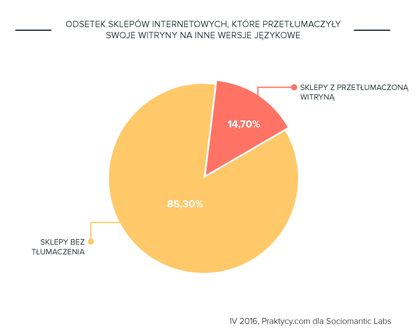 than a new guest. Competing with foreign e-commerce platforms, store owners cannot fail to use advertising solutions created thanks to new technologies, e.g., programmatic buying, which allows not only for directing intelligent, individualized advertising to a specific user but also for dynamic optimization of advertising creatives. Especially since European markets are at a high level of advancement in terms of using new technologies. Programmatic penetration in the advertising market will reach 60 percent in the Netherlands, 59 percent in the UK, 56 percent in France, 33 percent in Germany, and 31 percent in Spain by 2017. For comparison – according to Sociomantic Labs, the share of programmatic in online advertising spending in Poland in 2015 was estimated at approx. 10 percent.
Barriers related to foreign expansion are decreasing – however, the greatest resistance must be overcome by the e-shop owners themselves. Especially since the Polish e-commerce market is not easy – a large number of e-shops and the low purchasing power of Poles, which causes that in a large number of cases, a low price determines the purchase. Meanwhile, millions of customers with deep pockets are waiting in foreign markets, which are currently mainly targeted by international brands.
The report “Foreign expansion of Polish e-shops 2016” was created based on a study conducted in April 2016 by Praktycy.com commissioned by Sociomantic Labs. As part of it, 151 Polish online stores representing the 10 most popular product categories in Polish e-commerce were analyzed, verifying the criteria for e-business internationalization from the following areas: language versions of the site, type and number of currencies in the payment system, number and type of international domains of the e-shop.