









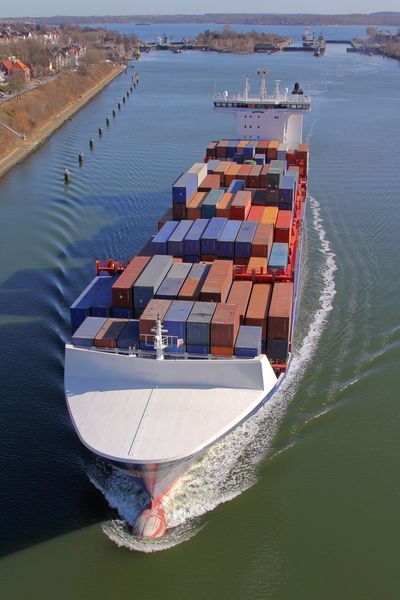
Inland navigation, characterized by mass transport, low energy intensity, and low external costs, has for many years been perceived as a competitive mode of cargo transport compared to road transport.
In Europe, the network of inland waterways allows for international, regional, and local navigation, creating connections between major regional cities and their hinterlands. This network consists of 42,000 km of waterways, half of which are accessible to vessels with a tonnage exceeding 1,000 tons. Rivers and canals intersecting cities allow for connections between inland terminals and create conditions for developing various variants of transport chains in cargo handling.
In the northwestern part of Europe, the inland waterway network is highly developed, and inland ports along major waterways even compete with some seaports, ensuring barrier-free flow and cargo handling. Waterways of regional importance create feeder systems for inland sections and base ports.
Out of the 27 countries of the European Union, 18 have a well-developed network of waterways. The most significant is the Rhine-Main-Danube waterway, which runs through more than 10 European countries, allowing for the transport of cargo from the North Sea to the Black Sea.
Currently, the volume of all types of cargo transported by inland navigation in Europe is approximately 500 million tons/year. In addition to bulk cargo, consumer goods are increasingly being transported. In recent years, active integration of inland navigation into containerized cargo handling has been observed in Western European countries. It is assumed that by 2020, container transport will increase significantly. This is due to both the many advantages of this form of navigation and the need to implement the objectives of EU transport policy.
Almost all types of cargo are transported in containers, both those with low and high transport susceptibility, including food products. Some of these goods are perishable, currently accounting for about 8-10% of all transported cargo. They require specific climatic conditions (microclimate parameters) during transport and storage, such as constant temperature, relative air humidity, ventilation, etc., and their transport (both frozen and chilled) often takes place in refrigerated containers.
The article contains 21,470 characters.
Source: Logistyka Magazine