








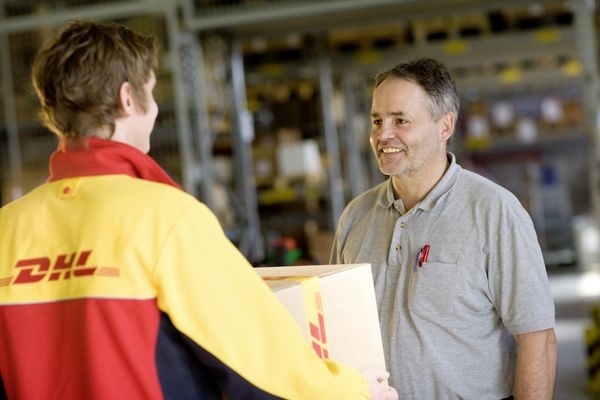
The dynamic development of the e-commerce market means that every year there is an increasing demand among courier companies for people who can deliver ordered shipments to customers quickly and effectively. Requirements? It is no longer just a driver’s license and readiness to work, but also organizational and logistical skills, interpersonal skills, and the ability to work under time pressure.
The work of a courier is not among the simplest. Every day, couriers contact dozens of customers, often forced to fight against adverse weather and traffic difficulties. They cover even hundreds of kilometers to deliver a shipment to the indicated address, while maintaining full professionalism and commitment. After all, they represent not only themselves but also the company they work for.
– Couriers must be sharp and think clearly, because contrary to appearances, they have a lot of so-called paperwork – says Radosław Iwański, courier transport coordinator at DHL Parcel. – When delivering shipments with documents, they must carefully check the list of certificates they should take from the client, verify the consistency of personal data when signing contracts, ensure that the client signs in the appropriate places, etc. Additionally, they should be stress-resistant, because complications on the road and constant haste are everyday occurrences in this profession.
And what does an average courier’s workday look like? Each one is different, although it starts similarly – with the courier arriving at the terminal. There, they pick up the shipments they will be tasked with delivering that day. During the pickup of packages, each one is carefully checked by the courier. Before it reaches the car, its number is scanned using a handheld device and carefully inspected to ensure it is not damaged in any way. Only then can the courier pack it into the car, plan the delivery route, and hit the road.
Proper route planning is crucial for the shipment to reach the recipient as quickly as possible. This is where the ability to think logically really comes in handy, because in addition to delivering shipments, the courier also performs so-called collections, i.e., picking up packages for subsequent delivery directly from customers. First, however, they must make room for them in the car, and often complete an order within specific hours. Any mistake can cause delays. That is why it is important for couriers to get to know the area where they work as quickly as possible and react flexibly to any unexpected difficulties that may arise.
To streamline the work of couriers, each of them is assigned their own area, which they quickly get to know like the back of their hand. They also quickly get to know their customers, whom they often happen to see almost every day. That is why couriers often warn them about their arrival, trying to contact them before delivering the shipment. They do this out of a sense of duty and kindness. In fact, a courier does not have to call customers at all, but very often they want to. This saves time not only for them but also for their customers. After delivering all shipments and collecting the requested packages, the courier returns to the base and can rest a little. They hand over the shipments collected throughout the day, check the received documents, settle accounts, and… finish work.
– Currently, over 3,000 couriers work for us. We have been cooperating with many of them for even a dozen years or more, and we are impressed by their reliability and enormous commitment. Couriers are the ambassadors of our company and our source of pride – declares Agnieszka Świerszcz, Director of Domestic Operations, member of the board of DHL Parcel.
The most difficult time for couriers is during peak parcel periods, which are a real challenge for everyone involved in the logistics industry. The volume of B2C shipments, i.e., those directed to individual customers, then increases by up to 60%. Now, with the beginning of the year, the number of deliveries is moderate, so the work of couriers proceeds much more calmly, which does not mean it is trouble-free. The requirements of courier company customers are constantly growing. More and more often, rather than the price of the service, they pay attention to its quality. Customers want not only to receive the products they ordered faster and faster, but they also expect the package to be delivered by a friendly, smiling courier in a neat uniform.
– Couriers meet many different people during their work. It is known that not everyone will be nice and in a good mood, but a courier must maintain professionalism in every situation. It is sometimes very difficult – explains Radosław Iwański.
The work of a courier is primarily about the people one meets every day. Even if it is sometimes not the easiest, it brings a lot of satisfaction and is certainly not boring. You never know what the next day will bring. Anything can happen, and that is exciting.