









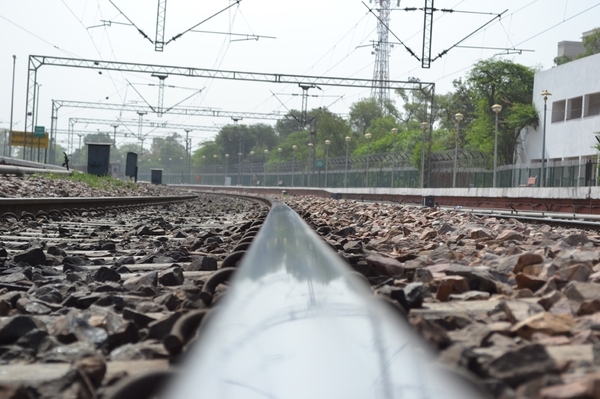
For many years, the primary branch of transport in Poland has been road transport, which has a significantly larger share in the volume of transported goods than rail transport. Undoubtedly, this state of affairs must change.
In the White Paper published in 2011 by the European Commission, one can find a provision regarding the optimization of multimodal logistics chain operations, including through greater use of more energy-efficient means of transport. In this paper, it was stated that by 2030, 30% of road freight transport over distances greater than 300 km should be shifted to other modes of transport, such as rail or water transport, and by 2050, this should be more than 50% of such transport. The White Paper added that for this goal to be met, the expansion of appropriate infrastructure must take place, namely the completion of the high-speed European rail network by 2050. Additionally, there must be a threefold increase in the existing high-speed rail network by 2030 and the maintenance of a dense rail network in all member states, as well as the creation of a fully functional EU-wide multimodal TEN-T core network by 2030, and by 2050, the achievement of high quality and capacity of this network, as well as the creation of appropriate information services. To meet these requirements, it is necessary to overcome various barriers that currently exist in the rail market. Increasing the share of rail transport in transported goods will not only reduce congestion but will also increase safety on already dangerous roads. Additionally, the quality of life of society will improve – through less noise, as well as carbon dioxide emissions into the atmosphere.
In the further part of the article, the author presents the state of rail transport in Poland, as well as the barriers that should be overcome so that the development of this branch of transport can take place dynamically.
The article contains 19,900 characters.
Source: Logistyka Magazine