








Continuing its ten-year partnership with the terre des hommes organization in the Indian state of Uttar Pradesh, Dachser has decided to further increase its commitment to protecting children’s rights, education, vocational training, and the protection of natural resources in additional regions in India, Nepal, Brazil, and Namibia. Over the next five years, the operator plans to invest more than 1.1 million euros in local projects aimed at permanently improving the lives of the people living there.
– Logistics brings people, markets, and businesses closer together. We are a global company, which is why we feel we should help people who have worse living conditions and cannot benefit from the globalization process to the same extent as others – says Bernhard Simon, CEO of Dachser. – To achieve a lasting effect, patience and long-term actions are needed. That is why we will continue to support the work of our local partners within the terre des hommes project in India, while simultaneously expanding our commitment to other countries and continents.
From education to sustainable development
The results of projects implemented over the last decade show that the terre des hommes organization has contributed to a lasting improvement in the living conditions of children and youth in 136 villages in the impoverished Indian state of Uttar Pradesh:
– Almost 17,000 children and women have received knowledge about their rights and how to claim them in the democratic Indian society.
– Over 15,300 children have benefited from the opportunity to receive primary education. Subsequently, about 60 percent of them attended public or private schools. The number of school dropouts decreased by 40 percent.
– About 4,700 children, mainly girls, participated in vocational training related to computer skills or practical crafts.
– Children and youth planted over 14,200 trees; 117 composting units and 112 biogas systems were installed; 100 families received solar-powered lamps, enabling children to study after dark.
– 97 schools received drinking water tanks and sanitary facilities.
Dachser currently supports the terre des hommes project on three continents
India, Nepal
In one of India’s states, Uttar Pradesh, Dachser and the local partner organization terre des hommes intend to continue their successful cooperation at least until 2020. These activities include education on human and children’s rights in 50 villages, promoting youth and women’s organizations and the need for education, as well as the protection of natural resources. The new project aims to improve the living conditions of the Musahar, an Indian ethnic group living in the region near the border with Nepal, who suffer from extreme discrimination and economic problems. Access to clean water, sanitary facilities, education, and women’s rights are the subject of a third project that will be implemented in three Nepalese villages. Terre des hommes will also help young people in Mangolpuri, which is one of the largest slums in New Delhi. The goal is to encourage youth to return to school and conduct training through online courses.
Brazil
From 2015 to at least 2017, Dachser will support the work of the Children’s Rights Center in Limeira, located in a part of the Campinas metropolitan area in the state of Sao Paulo. Its activities focus on helping children and youth escape crime and drug addiction. To achieve this, the center implements direct educational activities in schools and alternative extracurricular programs, as well as seminars on children’s rights for representatives of civil society entities and government officials.
Namibia
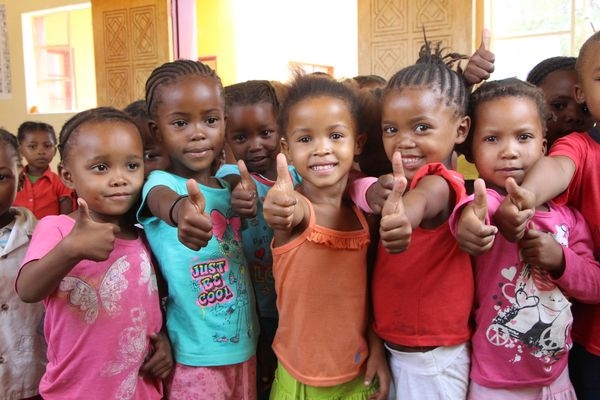
In this country, terre des hommes and Dachser are working together to complete a project by 2017 aimed at improving the conditions of local children from the San ethnic group (Bushmen). In this oldest ethnic group in southern Africa, people mostly live in extreme poverty, on large farms, or in slums on the outskirts of small towns. The main focus of the project work is education and supporting children in primary school learning. Vocational training will also be important, especially for girls, to prepare them for work in hotels and shelters and to provide them with practical skills.