








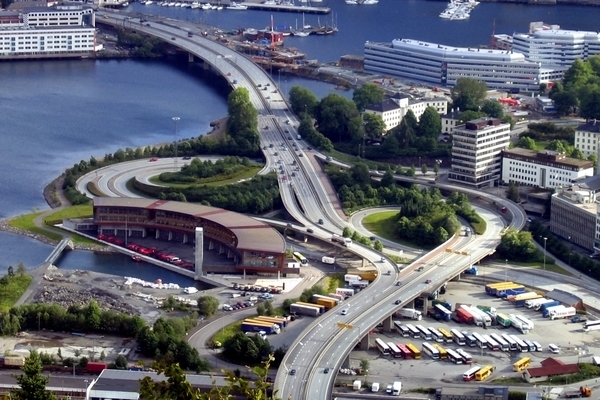
The development of urban areas is one of the most visible manifestations of civilizational progress. Cities represent the most mature spatial form of human activity. The accessibility of a city, expressed through its transport subsystem, is a source of both benefits and costs, some of which are borne by all users of urban space.
Planning mobility in urbanized areas therefore requires a comprehensive approach that respects economic, spatial, and social issues. A relatively new planning tool covering a wide spectrum of fields is the Sustainable Urban Mobility Plan (SUMP), which has been used to varying degrees in European Union countries for years. Since 2013, these plans have been highlighted in the Urban Mobility Package adopted by the European Commission.
EU transport policy regarding urban areas
EU transport policy regarding urbanized areas aims to achieve various goals through a broad set of regulatory instruments. Furthermore, its objectives are formulated at different levels of detail and are characterized by long implementation timelines (up to 2050). In the 2014-2020 period, European cohesion policy gained an urban dimension, of which current EU transport policy is a significant element.
In terms of subject matter, urbanized areas became a subject of European transport policy quite late. The 1991 White Paper focused primarily on issues of reforming transport systems of national and international importance.
Only 10 years later, in the Commission communication “A Sustainable Europe for a Better World: A European Union Strategy for Sustainable Development,” transport congestion was recognized as one of the greatest threats to sustainable development. The same document proposed the so-called “decoupling,” which consists of “weakening the link between the growth of transport production volume and GDP growth dynamics, in order to reduce congestion and other negative externalities resulting from transport activity.”
The White Paper “European Transport Policy for 2010: Time to Decide” set ambitious goals for the European transport sector. Those relating to urban mobility were largely not achieved, including the reduction of CO2 emissions and the reduction of the role of passenger cars in urbanized areas.
The article contains 30,570 characters.
Source: Logistyka Magazine