










The directions for sustainable transport development, which means development that takes into account ecological rationality, economic viability, and social justification, were outlined in the EU White Papers of 2001 and 2011.
Unfortunately, only some of these directions are being implemented in Poland. The purpose of this article is to demonstrate that EU trends are treated quite selectively in Polish transport policy, for various reasons. Analyzing the directions and problems of transport development in Poland, one might get the impression that the principle of sustainable development is sometimes applied selectively, i.e., sometimes the economic aspect is highlighted, sometimes the ecological one (or just a selected element of it), rarely the social one, and it is difficult to find an example of equal treatment of all three criteria of sustainable development. The analysis will be carried out using the examples of inland waterway transport development problems and high-speed rail.
Inland waterway transport in the sustainable development of transport in Poland
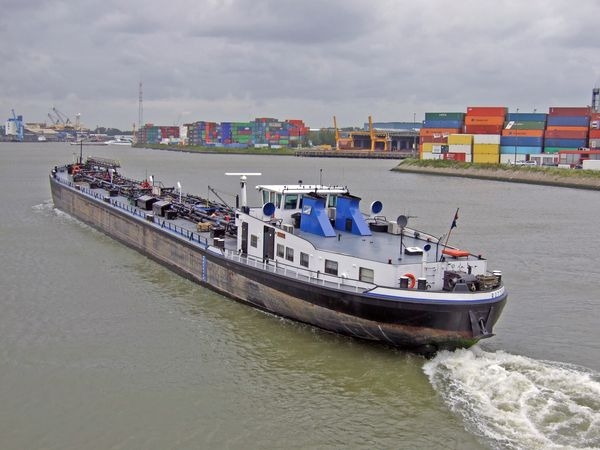
Among the actions aimed at reducing greenhouse gas emissions in transport by 60%, as set out in the 2011 EU White Paper, the following is primarily related to inland waterway transport: Action 3: shift 30% of road freight over 300 km to other modes such as rail or waterborne transport by 2030, and more than 50% by 2050.
Great potential also lies in the use of this branch in urban logistics, and thus in the implementation of Action 1: halve the use of ‘conventionally-fuelled’ cars in urban transport by 2030; phase them out in cities by 2050; and achieve essentially CO2-free city logistics in major urban centres by 2030.
In Poland, this branch of transport has not found its proper place in transport policy for years, and the main argument against the development of this most environmentally friendly branch (alongside maritime transport) is ecological concerns. It is most often argued that the Natura 2000 program does not allow for any investments in Natura 2000 areas, including the development of inland waterways necessary for the growth of inland waterway transport.
The article contains 18,120 characters.
Source: Logistyka Magazine