









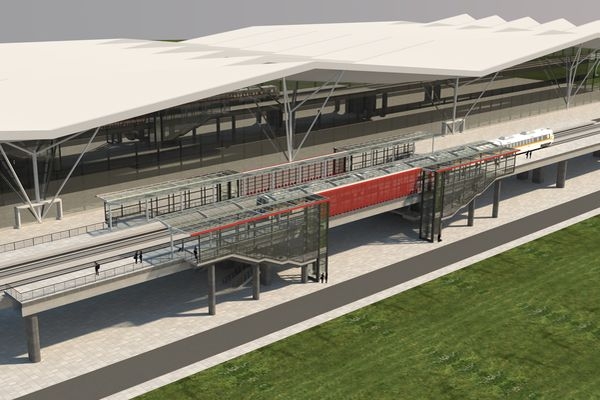
On August 30, 2015, during a ceremonial inauguration, the Pomeranian Metropolitan Railway (PKM) was opened, connecting Gdańsk with the Lech Wałęsa Airport and further with the Kashubia region.
According to the international advisory firm JLL, which presented a report earlier this year titled “Pomeranian Metropolitan Railway – new development perspectives for the Tri-City real estate market,” this is a great opportunity for the region, both in terms of labor market development, attracting new projects from the business services sector, as well as residential and commercial construction.
– This project fits perfectly into the entire infrastructure plan implemented in the province, along with the assumptions of economic, transport, and environmental policy implemented at all levels: from cities and the region to the provisions of EU documents. The PKM will also have a significant impact on reducing CO2 and greenhouse gas emissions. The impact of the PKM on the Tri-City will be significant in many respects – informs Marcin Faleńczyk, Deputy Director of Invest in Pomerania.
The project assumes the use of areas, including those from a former railway line, and sections of underutilized regional railway lines managed by PKP PLK SA. The first stage of the investment has just been opened, which involved rebuilding the regional railway transport network through the revitalization of the Kokoszki Railway, which had been inactive since 1945, and the construction of a section connecting the southern districts of the City of Gdańsk with the Airport in Rębiechowo and the Gdynia – Kościerzyna railway line.
– The launch of the fast PKM rail connection increases the pool of employees for the Tri-City by shortening their commute time from the Kashubia region. The entire transport network in the Tri-City gains a new dimension and a new quality thanks to the PKM by activating certain typically residential districts – said Magdalena Reńska, Director of the JLL Tri-City office.
The Pomeranian Metropolitan Railway will strengthen existing office locations, but according to JLL specialists, it will also accelerate the implementation of development plans for areas near the airport in Gdańsk, where modern business parks may be built in the future. In the Wrzeszcz area, there are popular shopping malls (including Galeria Bałtycka, CH Manhattan, or the currently under construction Galeria Metropolia); thanks to the Gdańsk Wrzeszcz station, the PKM has a chance to provide them with an additional influx of customers. Along the Tri-City Bypass, there is also significant potential for warehouse and industrial projects. Although the largest clusters of such facilities in the Tri-City are currently located much further south of the under-construction PKM line, there are also extensive investment lands suitable for such ventures in the vicinity of the airport. Access to PKM stops in the area may therefore be an argument for logistics or manufacturing companies looking for employees.
– Thanks to the opening of the PKM, the Tri-City has gained one of the most modern transport systems in the country. Our research shows that developers and investors are looking for land for construction in the immediate vicinity of new railway stations. This type of investment carries a number of positive associations such as modernity, dynamism, sustainable development, and emphasizes the metropolitan character of the agglomeration – concludes Jan Jakub Zombirt, Director in the Research and Consulting Department, JLL.