










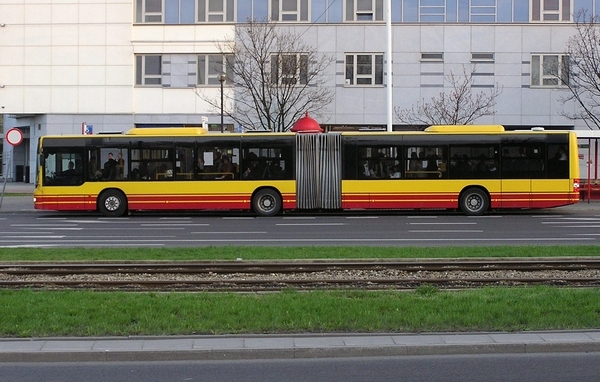
Sustainable development requires, among other things, that in the area of passenger transport, the use of private cars in daily travel be reduced while simultaneously increasing the use of public transport, bicycles, or walking.
This also applies to aspects of sustainable mobility, within which actions involving the use of eco-friendly means of transport and those concerning the updating of strategic urban transport documents are essential. Many modern cities face the challenge of reducing external costs associated with growing individual motorization and ensuring public collective transport services at an appropriate level. Therefore, it is necessary to use a variety of “hard” measures (typically investment-related, primarily concerning the expansion and improvement of transport infrastructure) and so-called “soft” measures (related to, among other things, mobility management, promotional and information campaigns). One very useful tool for mobility management, though not sufficiently developed in Polish conditions, is the mobility plan. It encompasses solutions that implement the idea of sustainable transport development and simultaneously constitute a set of actions promoting alternative and ecological forms of travel. The purpose of this article is to present the mobility plan as an effective tool for implementing the principles of sustainable urban development.
Sustainable transport development in European documents
The European Federation for Transport and Environment defines the concept of sustainable transport as “movement that meets the mobility needs of today’s generations while caring for the state of the environment, living conditions, and the economic development opportunities of future generations, expressing the contribution of transport to the realization of the idea of sustainable development.” The implementation of the principles of sustainable transport development in cities is reflected in numerous strategic documents of the European Union. According to the 2007 Green Paper, urban mobility should be based on cooperation in the areas of spatial planning, economic and social affairs, transport, etc. Urban mobility policy must primarily be integrated and combine innovative technologies, the development of ecological, safe, and intelligent transport systems, as well as economic incentives and appropriate legal changes. The Green Paper also contains information regarding the creation of mobility plans that could refer to both the transport of people and goods in cities and their suburbs. The role of mobility plans would be to create a foundation for effective urban mobility planning. The 2011 White Paper indicates challenges regarding the support of mobility while maintaining the principles of sustainable transport system development and the transition to more ecological transport in cities. At the same time, the White Paper emphasizes the need to create new transport patterns and develop the transport sector under the assumption of:
- improving the energy efficiency of vehicles;
- developing and introducing fuels and propulsion systems consistent with the principle of sustainable development;
- optimizing the operations of multimodal logistics chains;
- more efficient use of transport and infrastructure through the application of better traffic management and information systems.
The article contains 20,240 characters.
Source: Logistyka Magazine
Klos-Adamkiewicz_Mobilnosc_narzedziem_zrownowazonego_rozwoju_transportu.pdf