








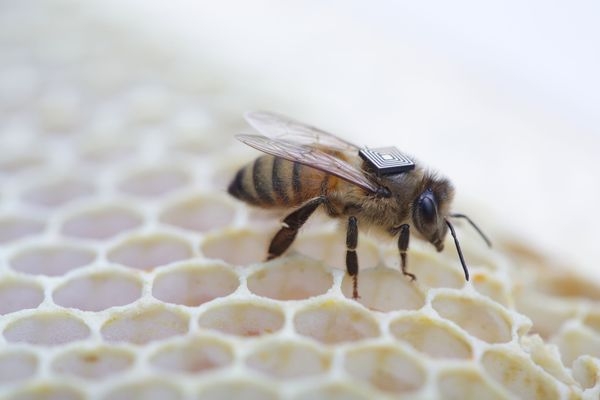
Experts are sounding the alarm. The global bee population is declining, and existing colonies are threatened with extinction. This is a major problem, especially considering that bees are responsible for pollinating one-third of our crops.
Research into bee health has been conducted for years, but thanks to the collaboration between Intel and CSIRO, an Australian government agency specializing in scientific research, it may now gain momentum. Based on Intel technology, a special system has been created that allows for monitoring insect behavior and analyzing the environment in which they live. The heart of the system is the miniature Intel Edison platform and sensors so small that they easily fit on a bee’s back.
Intel’s technology will play a key role in monitoring the health of bees, which has been keeping scientists around the world awake at night for several years. The system is based on the miniature Intel Edison platform, which is not much larger than a postage stamp.
The miniature computer designed by Intel is to be placed inside the hive. The microsensors, meanwhile, will be placed on the backs of the bees living in a given hive. Communication between the Intel Edison platform and the sensors will take place via RFID, a technology that uses radio waves to transmit data. Data from the microcontrollers placed on the insects will be captured as the 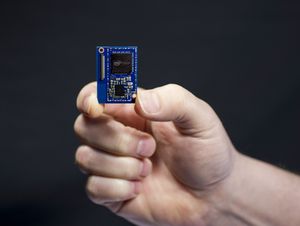 bees approach the Intel Edison platform. The platform will also collect and analyze environmental data, including air humidity, temperature, and solar radiation. The Intel Edison platform, bundled with the microsensors, will be distributed by CSIRO to partners around the world as part of the Global Initiative for Honey bee Health (GIHH) program.
Information gathered by the Intel Edison platform placed in the hive is sent to the CSIRO Data Access Portal. Based on this, researchers build 3D models visualizing bee movement in their environment and track the insects’ reactions to stressors, including pesticides and water pollution.
This methodology has already been implemented by CSIRO in Hobart, Tasmania, where microcontrollers were placed on the backs of 10,000 bees. Currently, the Australian organization is looking for other centers with which it can establish cooperation.
– Bee colonies are dying all over the world, and we still cannot definitively determine the cause – says Professor Paulo de Souza of CSIRO. – Due to the global nature of this problem, we saw the need to develop a methodology that would be simple for any scientist to implement. This way, we can compare data from around the world and study bee health together. This united effort is a fantastic example of the functionality of the Internet of Things.
The project implemented by Intel in cooperation with CSIRO is one of the proofs of how Moore’s Law, formulated in 1965, can be used for the advancement of science.
– Gordon Moore, one of Intel’s co-founders, stated that the number of transistors on a computer chip would double every year. This forecast has become a driving force not only for industrial development but also for scientific research – says David Mellers of Intel Technology. – Thus, the implemented solutions are not only an achievement from a technological perspective but also in terms of economic and social value.