










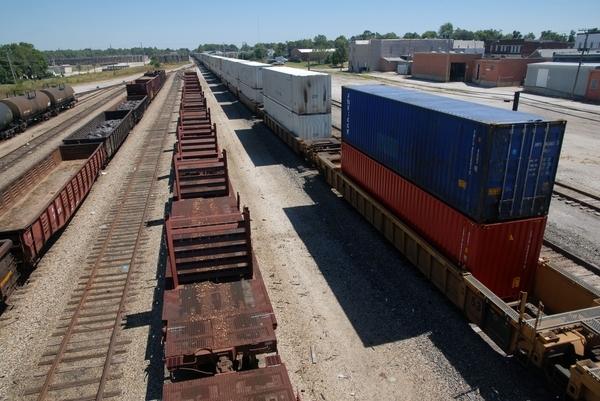
The fundamental background accompanying the evolution of the rail transport services market in Poland during the transformation period was the dynamic economic changes affecting both the rail sector itself and its environment. The starting point was the role of transport, shaped in the previous political system.
At that time, freight transport was the most important, as a derivative of an economic model focused on heavy industry and large-scale production. In freight transport, such a structure of demand for transport necessitated long-distance haulage and the dominance of bulk cargo. Rail was best suited to these needs, dominating the modal structure and absorbing over 80% of the sector’s expenditure. With the accession to the European Union and the implementation of EU documents and European law regarding rail transport, fundamental changes took place in the rail freight transport services market. The problem is whether there has been a revitalization of rail transport in Poland, or rather its stagnation, or perhaps even marginalization.
The aim of the article is to analyze the causes of changes in the rail transport services market, analyze the changes made in the market in the 2004-2013 period, and the impact of these changes on the place and role of rail transport in the Polish economy.
1. Synthesis of market change conditions before Poland’s accession to the European Union
The turn of the 1980s and 1990s inaugurated deep political and systemic changes in Poland and other Central and Eastern European countries. The new definition of the state’s function also sanctioned changes in economic life, including, among others, the equalization of private, cooperative, and state property rights. The creation of new operating principles particularly concerned the transformation of previously monopolized state sectors, such as transport, which, as G. Rosa emphasizes [13, p. 197], had previously lacked incentives to undertake competitive actions.
With the change in the economic model, the shortcomings and flaws of the existing transport system and infrastructure, which was unable to meet the new tasks set for it by the economy, were revealed.
The article contains 27,350 characters.
Source: Logistyka Magazine