








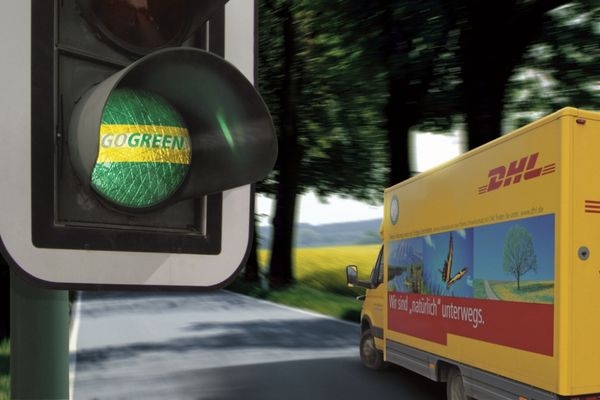
Deutsche Post DHL has become a member of the Ellen MacArthur Foundation’s “Circular Economy 100” group. The group’s members include companies, innovators, and regional representatives who are joining forces to contribute to the creation of a circular economy based on renewable resources, by proposing individual projects or completely changing the direction of their business activities.
Deutsche Post DHL impressed the Foundation with its corporate strategy and activities under the Group’s GoGreen program. The institution highlighted the Group’s efforts to optimize supply chains, its long history of reverse logistics, reduction of CO2 emissions, use of renewable energy, and employee engagement in environmental issues.
– Admission to this group is a confirmation of our focus on sustainable development. Membership also provides a good platform for jointly addressing the greatest challenges of the future – said Christof Ehrhart, Executive Vice President of Corporate Communications and Responsibility at Deutsche Post DHL. – We all know that resources are limited, the climate is changing under the influence of carbon dioxide emissions, and consumer behavior could lead to intensified problems in the future. Joining forces and ideas to solve these challenges is an important step for future generations.
– Deutsche Post DHL is an international leader in the logistics industry, and we are delighted to welcome them to the Circular Economy 100 group. Reverse logistics is an important factor enabling the transition to a circular economy, and Deutsche Post DHL will play a key role in providing new knowledge and collaboration opportunities within the program – said Andrew Morlet, CEO of the Ellen MacArthur Foundation.
Deutsche Post DHL will focus on increasing understanding and promoting the development of logistics models that allow for a more circular flow of goods, enabling more efficient secondary use, processing, and recycling of products, and avoiding waste generation.
The British Ellen MacArthur Foundation was established in 2010. Its goal is to work towards accelerating the transition to a circular economy based on renewable resources. Organizations represented in the “Circular Economy 100” group are tasked with helping to create this transition by developing case studies, exchanging information, and “thinking outside the box.” Renewable energy, reuse of raw materials and other materials, and avoiding the generation of emissions and waste are key concepts of this type of circular economy. In its annual “Circular Economy Report,” the foundation calculates what actions are necessary and what opportunities currently exist. For example, a current analysis of global value chains in 2014 showed that the transition to circular supply chains by 2025 could generate an additional annual value of EUR 780 billion worldwide and create 100,000 jobs.