








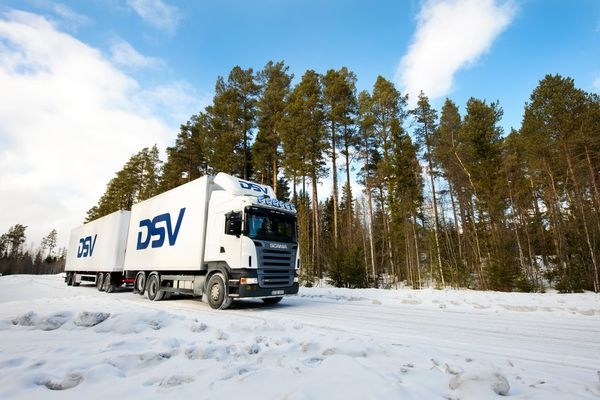
Scandinavia is famous for its strict road regulations. Finland breaks records for the highest fines, while Sweden believes that sometimes 40 km/h is too fast. However, the new regulations, significant from the carriers’ point of view, this time come from Norway.
The requirement that in winter all vehicles with a total gross weight exceeding 3.5 tons must be equipped with winter tires is fully justified. It is also natural that during road checks, the police in Scandinavian countries also verify the condition of the treads and the tires themselves. However, in Norway, from January 1, 2015, a regulation will be in force requiring drivers of tractor units to also have their trailers equipped with winter tires.
– For several years now, we have observed growing interest from Polish carriers in transport to our northern neighbors. For some of them, who have older tractor units, the lack of restrictive road tolls that they would have to pay in Western Europe is an incentive. Winters in Scandinavia, however, are dangerous and characterized by difficult road conditions. Many drivers are not aware of this, and the lack of proper preparation of the fleet often results in dangerous accidents. At the same time, the beginning of winter is a period of increased inspections of the technical condition of vehicles by the Scandinavian police, which in the case of irregularities often ends not only with a fine but also with the detention of the vehicle until they are removed – explains Piotr Nowak, Director of the Western Region at DSV Road. – That is why it is so important to choose a proven carrier that uses experienced drivers who are professionally prepared for the surprises prepared by winter in the north. Proper preparation for handling Scandinavian routes will involve higher costs, but then we can be sure that our shipment will not only arrive on time but also in one piece.
Unfortunately, the new Norwegian regulations are not the only reason why transport in Scandinavia will generate additional costs. At the beginning of 2015, a new sulfur directive comes into force. It defines the maximum limit of sulfur content in bunker fuel used, among others, by ferries. It reduces its permissible composition from 1.0% to 0.1%.
– It is difficult at the moment to determine how much the costs associated with the use of sea transport to Scandinavia and Great Britain, carried out with the participation of independent operators, will increase. Shipowners currently have three options – they will change to more expensive fuel that meets the sulfur concentration requirements, install fuel purification devices in the ships’ exhaust systems, or invest in new units powered by alternative fuel – assesses Piotr Krawiecki, President of the Management Board of DSV Road. – In each of these cases, we can expect that these costs will be passed on to carriers, which will ultimately be reflected in rates for end customers.