








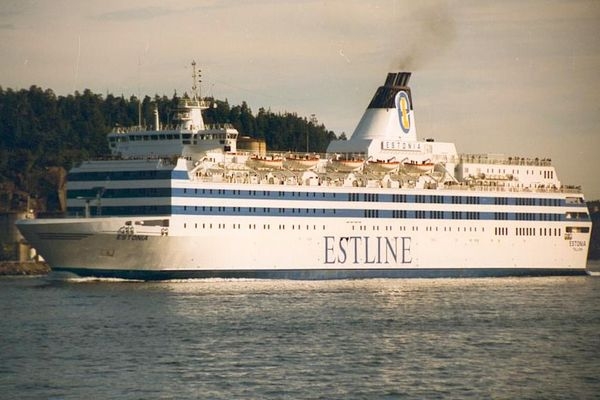
Twenty years ago, the MS Estonia sank in the Baltic Sea. The vessel was built in 1979 at the German Meyer Werft shipyard for the company SF Line. The ship sailed for various owners under different names, such as Viking Sally, Silja Star, and Wasa King. On the day of the disaster, there were 803 passengers and 186 crew members on board – a total of 989 people. 852 people died that day. The ferry was sailing from Tallinn to Stockholm.
With the end of this month, 20 years have passed since this tragedy, and it is an appropriate time to assess what progress has been made in improving maritime safety and rescue since that moment. The disaster that occurred on September 28, 1994, might not have reached such a scale if the Mayday signal had been transmitted correctly and if about 310 people had not been trapped by blocking doors to prevent water from flowing through. The rescue operation was hindered by a lack of power and the severe list of the vessel (30-40 degrees to the starboard side). About half of the people reached life rafts, which were not properly inflated. There was also no time to launch the ship’s lifeboats.
It should be noted that on September 28, 1994, the water was cold, about 10-11°C, and many people were improperly dressed and did not have life jackets. The first ship sailing to help arrived at the scene 20 minutes after the Estonia sank. Four passenger ferries arrived even later. The first rescue helicopter arrived about 70 minutes after the incident.
During the next six hours, six more ships and six helicopters appeared at the scene. 138 people were rescued (one died later in the hospital). Of these people, 104 were picked up by helicopters and only 34 by ships, even though they arrived earlier than the helicopters. The ships were not prepared to conduct rescue operations. Their lifeboats could not be launched in those conditions, so the crew had to improvise.
Today – conclusions and experiences
Many rescue methods have improved. In particular, it is necessary to highlight new ship designs, their damage stability, and personnel training in crisis situations and crowd management. Search methods and rescue plans have been developed jointly for passenger ships, carriers, and SAR services.
Passenger-cargo ships of the class and size of the Estonia ferry were quickly equipped with rescue equipment, and after long and difficult discussions at the international level, all ships sailing on international routes were required to have plans and procedures for rescuing people in the water. The regulation only entered into force on July 1, 2014.
However, not everything is as it should be. Mass rescue operations are rare, and maintaining sufficient capacity to respond to them is impractical. Therefore, there is a capability gap that someone must fill when such an event occurs.
IMRF (International Maritime Rescue Federation) Chief Executive Officer Bruce Reid believes that the IMRF as an organization plays its role in providing assistance and improving capabilities to fill the aforementioned gap.
The organization also played a significant role in the debate on regulations and the preparation of detailed guidelines when the IMO (International Maritime Organization) conducted a comprehensive review of safety levels a few years after the Estonia sank. The IMRF states that in mass rescue operations that require immediate response and assistance to a large number of people, SAR forces are insufficient.
IMRF projects aim to improve response in such situations, wherever they might occur in the world. The organization’s goal is to provide international focus on mass rescue operations and create a forum for discussion on this topic. The organization defines specific problems it researches and finds solutions for, thereby leading to potential changes in international regulations and guidelines. The IMRF intends to compile and share online libraries with practical data to help organization members conduct mass rescue operations.
Disasters like the Estonia example are fortunately rare, but this rarity also poses a problem because maintaining readiness is uneconomical. The MRO project developed by the IMRF allows for obtaining answers and guidance based on people’s experiences and helps overcome this difficulty. As part of the project (MRO), the IMRF is trying to create a forum for discussion. Among other things, the IMRF has initiated conferences where disaster cases are discussed and conclusions with far-reaching consequences are drawn from them.
Esa Mäkelä, captain of the ship Silja Europa, who participated in the rescue operations, was invited to the first such conference in 2010. It was not an easy undertaking to describe the process after 16 years and draw conclusions from it.
IMRF conferences are led by a group of experts who develop rescue guidelines covering all major aspects of such events to facilitate their planning and preparation in the future. The IMRF is trying to close the capability gap by proposing, for example, the sharing of international resources and the use of additional means that could extend people’s survival time. The collected data and experience allowed the IMRF to develop a package of mass rescue workshops.
20 years have already passed since the Estonia disaster, and rescue operations are improving in every aspect. However, if there are opportunities to improve them, it should be done.