








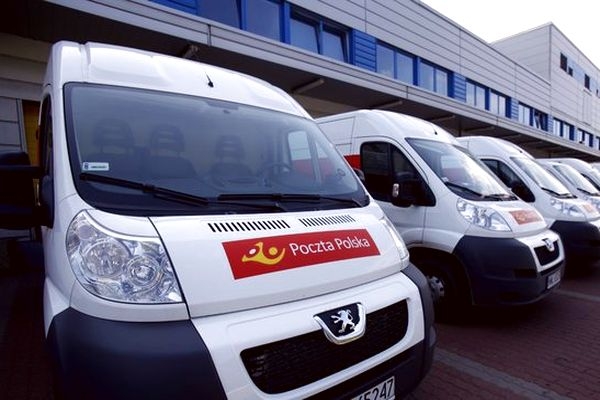
The Post Office is cutting costs and managing its vehicles effectively thanks to a modern and fully monitored fleet of cars. This year, it introduced 600 new vehicles out of the three thousand that will be replaced by the end of 2015. Since 2013, Poczta Polska has invested nearly PLN 200 million in its new fleet.
A modern fleet is part of the Company’s strategy, which assumes development in the most promising markets – parcels and logistics, banking and insurance services, and digital correspondence. Expansion in these areas requires necessary investments. Poczta Polska plans to allocate over PLN 1.3 billion for investments (including capital investments) between 2014 and 2018.
Since January 2013, the Post Office has replaced nearly 2,200 vehicles. They are covered by an electronic Vehicle Monitoring System. Today, 5,000 cars operate in Poczta Polska’s colors, and the implementation of monitoring in them was the largest operation of its kind in Poland. The fleet replacement is one of the elements of a series of changes in postal logistics, aimed at improving the efficiency of this area as well as the quality of services provided.
– The quality of our services and the timeliness of deliveries largely depend on the technical condition and age of our vehicles. New cars do not require as many repairs and are therefore cheaper to operate. And this allows us to maintain high timeliness in delivering our shipments – says Jarosław Toczko, Deputy Managing Director of the Logistics Operations Division of Poczta Polska for Logistics Resources and Service.
The monitoring system allows for the optimization of vehicle operating costs and increases the efficiency of their use. Poczta cars are monitored throughout Poland 24 hours a day, 7 days a week. Vehicle parameters such as location and route, amount of fuel refueled and its actual consumption, engine operating status, or opening of the cargo box are monitored.
– Every company using a transport fleet in its operations must have the appropriate tools that will allow it to reduce unnecessary costs associated with vehicle operation, and consequently – to use the existing fleet more effectively – adds Jarosław Toczko.
The introduction of the system is already bringing the expected results, as the benefits obtained exceed its costs by more than 100 percent. Despite the increase in the volume of cargo transported by Poczta Polska vehicles, primarily parcels and pallet shipments, and the replacement of 3 air connections with road transport, the number of kilometers traveled has significantly decreased. Since the beginning of the system’s implementation, it has decreased by nearly 4 million kilometers.
The introduction of the system was not easy. After signing the contract with the contractor selected in the tender, the correctness of its selection was questioned by one of the companies participating in the tender and by one of the postal trade unions. Complaints were filed, among others, to the President of the Public Procurement Office and the prosecutor’s office. However, these bodies did not find any violations of the law in the selection of the contractor. The new system also requires changing a whole range of habits and behaviors of postal drivers and dispatchers.