









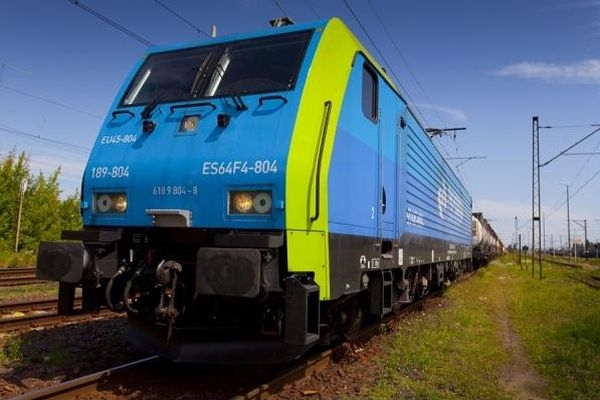
The Office of Rail Transport has extended the so-called Part A of the safety certificate for PKP CARGO until 2019. Holding this document is necessary to apply for a permit to conduct transport operations in Poland and EU member states. Currently, PKP CARGO can transport goods domestically and in seven EU countries.
The safety certificate is divided into two parts: A and B. Part A confirms that the railway carrier has a safety management system that meets all requirements stipulated in national regulations and European Union provisions. Part B is a direct permit for operations in a given EU country, issued by the local regulator. Holding Part A is a prerequisite for applying for Part B of the certificate.
At this moment, PKP CARGO holds Part B of the safety certificate for operations in Poland and seven EU countries: Germany, Austria, the Czech Republic, Slovakia, Belgium, the Netherlands, and Hungary. The certificate for operations in Poland is valid until 2015. The extension of the certificate for Poland’s largest freight railway carrier is an important signal for its customers, as it guarantees that PKP CARGO will be able to operate seamlessly within the EU area for the next five years.
– At PKP CARGO, we place great importance on safety while conducting operations. Participating as a carrier in rail traffic both domestically and abroad, we realize that the safety of our operations is the most important matter. The granted certificate is a vote of confidence in our safety management system. It is also a signal to other regulators in member states that we can operate safely within the European Union – says Wojciech Derda, Member of the Management Board of PKP CARGO for Operations. – I want to emphasize that PKP CARGO is constantly raising the level of safety, mainly by eliminating and minimizing identified and potential threats.
Safety certificates are issued by national railway regulators for a period of five years. PKP CARGO first received Part A of the certificate in 2009, and Part B for conducting operations in Poland in 2010.